Sea Slug (Nudibranch)アオウミウシ
Hypselodoris festivaNE— Not Evaluated
The blue sea slug is a small, vividly colored nudibranch common along Japan's rocky shores, instantly recognizable by its electric-blue body, yellow-edged mantle, and red gills, and notable for feeding exclusively on a single species of sponge.
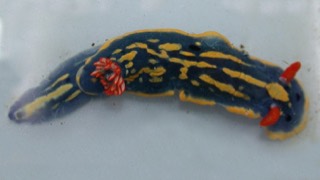 Sea Slug (Nudibranch) (reference photo)

Species Data
- Classification
- Nudibranchia / Chromodorididae Source
- Size
- Body length a few centimeters (2 cm in a specimen recorded at Niigata University's Sado Marine Biological Station)
- Diet
- Carnivore Feeds exclusively on a particular sponge, Halichondria okadai
- Distribution
- Found in shallow coastal waters from Hokkaido to Kyushu in Japan, and also recorded in Hong Kong, but notably absent from Okinawa despite occurring further south elsewhere. Source
Did You Know?
Where to See This Species
Operating facilities registered on this site: Japan 0
Verified individual animals and facilities will be added as official information becomes available.
Conservation Story
Conservation Status
Not Evaluated (NE)
Sources
Support Conservation
A visit is a small, positive way to support the daily lives of the animals you care about.
- Visit
- A visit itself helps support the facility.
- Animal Supporter Programs & Giving
- Find ways to support the facility through its official website.
FAQ
- What does the blue sea slug (Hypselodoris festiva) eat?
- It feeds specifically on a sponge called Dysidea sp. (kuroiso-kaimen in Japanese), making it a dietary specialist. Source
- Where is the blue sea slug found?
- It lives in shallow rocky reef habitats from Hokkaido to Kyushu in Japan and has also been recorded in Hong Kong, but is notably absent from Okinawa. Source
- How big is a blue sea slug?
- It is a small nudibranch, typically only a few centimeters long. Source
- How many operating facilities are registered here?
- Operating facilities registered on this site: Japan 0 Source
Books & gear
Source: ja.wikipedia.org en.wikipedia.org