Guanacoグアナコ
Lama guanicoeLC— Least Concern
The guanaco (Lama guanicoe) is a wild South American camelid found across the steppes, scrublands, and mountains of Argentina, Chile, Peru, and Bolivia, with Argentina alone home to about 95% of the global population. A fast, alert grazer, it is the wild ancestor of the domestic llama and produces fine fiber prized second only to vicuña wool. It is classified as Least Concern by the IUCN.
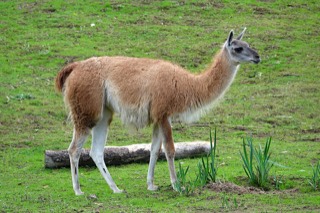 Guanaco (reference photo)

Species Data
- Classification
- Artiodactyla / Camelidae Source
- Size
- About 2.1–2.2 m (height 1–1.3 m)
- Weight
- 90–140 kg
- Lifespan
- Wild: 20–25 years (record 28 years)
- Diet
- Herbivore Herbivorous, eating grasses, shrubs, herbs, lichens, cacti, and flowers
- Activity
- Diurnal, remaining active throughout the day and always alert to predators
- Distribution
- Found across South American steppe, scrubland, and mountains, with Argentina alone hosting about 95% of the world's guanacos; smaller populations occur in Peru, Bolivia, Chile, and Paraguay. Source
- Sources
- en.wikipedia.org ja.wikipedia.org
Did You Know?
- It can run at speeds up to 64 km/h, giving it excellent speed for evading predators. Source
- Its blood contains about four times as many red blood cells per teaspoon as human blood, an adaptation to low-oxygen high-altitude habitats. Source
- Northern guanaco populations are considered ancestral to the domestic llama, and its fiber is valued in South America second only to that of the vicuña. Source
Where to See This Species
Operating facilities registered on this site: Japan 0
Verified individual animals and facilities will be added as official information becomes available.
Conservation Story
Conservation Status
Least Concern (LC)
Sources
Support Conservation
A visit is a small, positive way to support the daily lives of the animals you care about.
- Visit
- A visit itself helps support the facility.
- Animal Supporter Programs & Giving
- Find ways to support the facility through its official website.
FAQ
- Is the guanaco related to the llama?
- Yes. Northern guanaco populations are considered the wild ancestor of the domestic llama. Source
- How fast can a guanaco run?
- It can reach speeds of up to 64 km/h, an important defense against predators like pumas. Source
- How many operating facilities are registered here?
- Operating facilities registered on this site: Japan 0 Source
Books & gear
Source: ja.wikipedia.org en.wikipedia.org