Striped Skunkスカンク
Mephitis mephitisLC— Least Concern
The striped skunk is a North American mammal easily recognized by its black coat with two broad white stripes running down the back. Mostly nocturnal and solitary, it feeds on insects, small rodents, eggs, and fruit, and defends itself with a powerful, foul-smelling spray from glands near its tail. It is classified as Least Concern by the IUCN and remains common across its wide range.
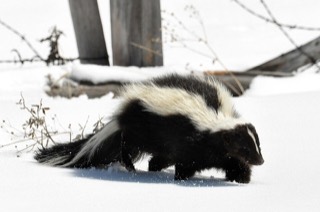 Striped Skunk (reference photo)
_DSC_0030.jpg)
Species Data
- Classification
- Carnivora / Mephitidae Source
- Size
- Body length about 40–68 cm
- Weight
- About 0.5–3 kg (up to about 5.5 kg recorded in captivity)
- Lifespan
- Wild: about 3–5 years / captive: about 8–10 years
- Diet
- Omnivore Omnivorous, eating small mammals such as mice, bird eggs, insects, and fruit; favors insects such as grasshoppers, crickets, and larvae, and takes rodents and plant matter seasonally
- Activity
- Nocturnal and solitary
- Distribution
- The striped skunk is found across much of North America, including southern Canada, the contiguous United States, and northern Mexico. Source
- Sources
- ja.wikipedia.org en.wikipedia.org
Did You Know?
- It can spray a powerful musk—largely composed of butyl mercaptan—from its anal glands, accurately hitting targets several meters away. Source
- Before spraying, it typically gives warning signals such as stamping its front feet and raising its tail to display the anal region. Source
- It often holes up in dens during winter but does not undergo true hibernation, and in the United States it is a leading rabies carrier second only to raccoons. Source
Where to See This Species
Operating facilities registered on this site: Japan 0
Verified individual animals and facilities will be added as official information becomes available.
Former facilities
North Safari SapporoHokkaidoOpened in 2005
Closed: 2025-09-30 Official Site
Conservation Story
Conservation Status
Least Concern (LC)
Sources
Support Conservation
A visit is a small, positive way to support the daily lives of the animals you care about.
- Visit
- A visit itself helps support the facility.
- Animal Supporter Programs & Giving
- Find ways to support the facility through its official website.
FAQ
- How far can a striped skunk spray its musk?
- It can accurately spray its scent glands' musk at targets several meters away as a defense against predators. Source
- What do striped skunks eat?
- They are omnivorous, favoring insects such as grasshoppers and beetles, but also eating small mammals, bird eggs, and fruit depending on the season. Source
- Do striped skunks hibernate in winter?
- No, they often stay in dens during cold weather but do not undergo true hibernation. Source
- How many operating facilities are registered here?
- Operating facilities registered on this site: Japan 0 Source
Books & gear
Source: ja.wikipedia.org en.wikipedia.org