Staghorn Coral (Acropora)ミドリイシ
Acropora granulosaNT— Near Threatened
Acropora, known in Japan as midoriishi, is the largest and most diverse genus of reef-building corals, forming the branching and table-shaped colonies that give many Indo-Pacific reefs their structure — and among the corals most vulnerable to bleaching from ocean warming.
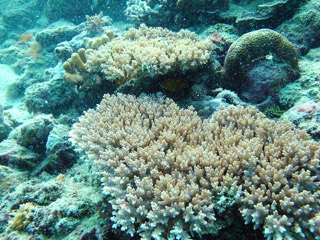 Staghorn Coral (Acropora) (reference photo)

Species Data
- Classification
- Scleractinia / Acroporidae Source
- Size
- Colonies grow in branching or table-like forms and can exceed 1 m in diameter under good conditions
- Diet
- Filter feeder Obtains most of its energy from photosynthetic products through symbiosis with zooxanthellae (Symbiodinium), and also extends its polyps at night to capture zooplankton
- Distribution
- Acropora is the most species-rich genus of reef-building coral, with over 100 species in the Indo-Pacific and 3 species in the Caribbean. Source
- Sources
- en.wikipedia.org
Did You Know?
- Acropora is the most speciose genus of stony coral and one of the primary reef-building corals shaping reefs worldwide. Source
- Bleaching occurs when the coral loses its symbiotic algae under stress from warming water, acidification, or pollution; in 2014 the U.S. Fish and Wildlife Service listed ten Acropora species as threatened. Source
Where to See This Species
Operating facilities registered on this site: Japan 0
Verified individual animals and facilities will be added as official information becomes available.
Conservation Story
Conservation Status
Near Threatened (NT)
Sources
Support Conservation
A visit is a small, positive way to support the daily lives of the animals you care about.
- Visit
- A visit itself helps support the facility.
- Animal Supporter Programs & Giving
- Find ways to support the facility through its official website.
FAQ
- How does Acropora coral get its energy?
- Most of its energy comes from photosynthetic algae (Symbiodinium) living in its tissue, though its polyps also extend at night to capture plankton directly. Source
- Why is Acropora coral vulnerable to bleaching?
- Heat stress, ocean acidification, sedimentation, and pollution can cause the coral to expel its symbiotic algae, turning it white and cutting off its main energy source; ten species were listed as threatened in the U.S. in 2014. Source
- Where is Acropora coral found?
- It is the dominant reef-building coral across the Indo-Pacific, with over 100 species there, plus 3 species native to the Caribbean. Source
- How many operating facilities are registered here?
- Operating facilities registered on this site: Japan 0 Source
Books & gear
Source: ja.wikipedia.org en.wikipedia.org