American Alligatorミシシッピワニ
Alligator mississippiensisLC— Least Concern
The American alligator is a large crocodilian apex predator native to the southeastern United States, from South Carolina to Texas, with the biggest populations in Louisiana. Males can reach 4.8 m in length and nearly 500 kg, preying on everything from fish to large mammals, and the species shows rare parental care among reptiles. Once nearly wiped out by overhunting, it recovered enough to be removed from the U.S. endangered species list in 1987 and is now assessed as Least Concern.
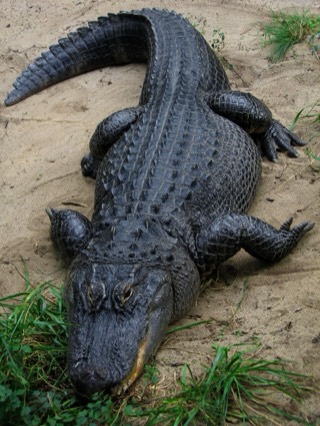 American Alligator (reference photo)

Species Data
- Classification
- Crocodilia / Alligatoridae Source
- Size
- Males 3.4–4.8 m in total length, females about 2.6–3.35 m
- Weight
- Males can approach 500 kg
- Lifespan
- Typically 50 years, sometimes over 70
- Diet
- Carnivore Apex predator; juveniles take small prey such as insects and frogs, while adults eat a wide range from fish to large mammals and turtles
- Distribution
- Found in the southeastern United States, from the Lowcountry of South Carolina south to Everglades National Park in Florida and west to South Texas, with Louisiana hosting the largest population. Source
- Sources
- ja.wikipedia.org en.wikipedia.org
Did You Know?
- It has been observed balancing sticks on its snout to lure nest-building birds within striking distance—among the first documented cases of tool use in a reptile. Source
- Overhunting nearly wiped out the species by the 1960s, but conservation efforts allowed populations to recover enough that it was removed from the U.S. endangered species list in 1987. Source
Where to See This Species
Operating facilities registered on this site: Japan 2
Toba AquariumMieOpened in 1955
Higashiyama Zoo and Botanical GardensAichiOpened in 1937
Conservation Story
Conservation Status
Least Concern (LC)
Sources
Support Conservation
A visit is a small, positive way to support the daily lives of the animals you care about.
- Visit
- A visit itself helps support the facility.
- Animal Supporter Programs & Giving
- Find ways to support the facility through its official website.
- Furusato Nozei
- Municipally run facilities may share official guidance for this Japanese hometown-tax program.
FAQ
- How big can an American alligator get?
- Males typically reach 3.4 to 4.8 m in length and can weigh close to 500 kg, while females are smaller at 2.6 to 3.35 m. Source
- Was the American alligator ever endangered?
- Yes—overhunting nearly eliminated the species by the 1960s, but conservation measures allowed it to recover, and it was delisted from the U.S. endangered species list in 1987. Source
- How many operating facilities are registered here?
- Operating facilities registered on this site: Japan 2 Source
Books & gear
Source: ja.wikipedia.org en.wikipedia.org