Arctic Foxホッキョクギツネ
Vulpes lagopusLC— Least Concern
The Arctic fox is a small, circumpolar canid adapted to some of the coldest environments on Earth, with fur that provides the best insulation of any mammal. It is an opportunistic omnivore, relying heavily on lemmings but also eating seal pups, fish, birds, and berries. Globally listed as Least Concern by the IUCN, though its mainland Scandinavian population is critically endangered with fewer than 200 adults remaining.
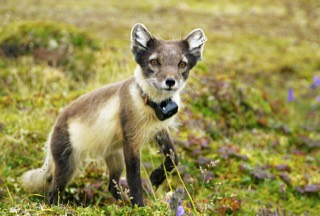 Arctic Fox (reference photo)

Species Data
- Classification
- Carnivora / Canidae Source
- Size
- Body length about 46–68 cm, tail about 26–42 cm
- Weight
- Males average about 3.5 kg (2.9–9.4 kg), females about 2.9 kg (1.4–3.2 kg)
- Lifespan
- Wild: after the juvenile stage, average 3–4 years, with rare individuals reaching 11 years; the record in captivity is 16 years
- Diet
- Omnivore Omnivorous opportunist, eating lemmings, voles, ringed seal pups, fish, waterfowl, and seabirds, as well as berries, seaweed, carrion, and insects
- Activity
- Active year-round and does not hibernate, but reduces activity in winter to conserve energy
- Distribution
- The Arctic fox has a circumpolar distribution across Arctic tundra in northern Europe, Asia, and North America, including Iceland, Scandinavia, Russia, Greenland, Alaska, and Canada south to Hudson Bay. Source
- Sources
- ja.wikipedia.org en.wikipedia.org
Did You Know?
- The Arctic fox's fur is considered to provide the best insulation of any mammal; its winter coat is nearly twice as thick as its summer coat, keeping its body temperature near 38°C even in extreme cold. Source
- Two genetically distinct color morphs exist — white and blue — and the white morph turns almost entirely white in winter for camouflage against the snow. Source
- In a tracking study, a yearling female traveled 3,506 km from Svalbard to Ellesmere Island in 76 days, averaging over 46 km a day and covering as much as 155 km in a single day. Source
Where to See This Species
Operating facilities registered on this site: Japan 2
Asahiyama ZooHokkaidoOpened in 1967
Kushiroshi DoubutsuenHokkaidoAbout 55 minutes from JR Kushiro Station by Akan Bus, or about 27 minutes (18 km) by car, taxi, or rental car.
Conservation Story
Conservation Status
Least Concern (LC)
Sources
Support Conservation
A visit is a small, positive way to support the daily lives of the animals you care about.
- Visit
- A visit itself helps support the facility.
- Animal Supporter Programs & Giving
- Find ways to support the facility through its official website.
- Furusato Nozei
- Municipally run facilities may share official guidance for this Japanese hometown-tax program.
FAQ
- How does the Arctic fox survive extreme cold?
- Its fur provides the best insulation of any mammal — the winter coat is nearly twice as thick as the summer coat, letting it maintain a body temperature around 38°C even in severe cold. Source
- Why do Arctic foxes change color?
- The common white morph molts to an all-white winter coat for camouflage in snow, then to a brownish-gray summer coat; a rarer 'blue' morph stays dark gray-blue year-round. Source
- Are Arctic foxes endangered?
- Globally the species is Least Concern, but the isolated mainland Scandinavian population is critically endangered, with fewer than 200 adults left. Source
- How many operating facilities are registered here?
- Operating facilities registered on this site: Japan 2 Source
Books & gear
Source: ja.wikipedia.org en.wikipedia.org