Argentine Horned Frogベルツノガエル
Ceratophrys ornataNT— Near Threatened
The Argentine horned frog is a large, voracious ambush predator native to the grasslands of Argentina, Uruguay, and southern Brazil, nicknamed the "Pacman frog" for its oversized mouth and habit of trying to swallow anything that moves nearby. It hunts by burying itself halfway in soil and lunging at passing prey, feeding on insects, rodents, birds, and other frogs. Listed as Near Threatened by the IUCN due to habitat loss, it is also notable for tadpoles that emit distress calls when attacked, the first documented case of acoustic communication in any tadpole.
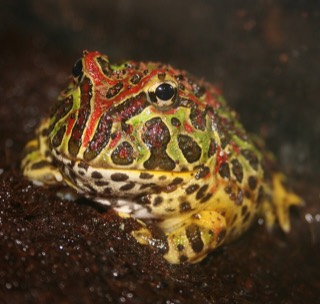 Argentine Horned Frog (reference photo)
.jpg)
Species Data
- Classification
- Anura / Ceratophryidae Source
- Size
- Body length: males about 10–11.5 cm, females about 12.5–16.5 cm
- Lifespan
- Said to average about 6–7 years; some captive individuals live over 10 years
- Diet
- Carnivore Carnivorous, preying on insects and arthropods as well as other frogs, small reptiles, rodents, and birds; one stomach-content study found frogs made up 78.5% of the diet
- Distribution
- Endemic to the grasslands of Argentina, Uruguay, and southern Brazil. Source
- Sources
- ja.wikipedia.org en.wikipedia.org
Did You Know?
- Its enormous mouth—accounting for roughly half its overall body size—and its habit of trying to swallow anything that moves within reach have earned it the nickname "Pacman frog." Source
- It hunts by burying itself halfway into the soil and ambushing prey that wanders within striking distance. Source
- Its tadpoles have been documented emitting distress calls when attacked both underwater and above water, marking the first reported case of acoustic communication in any tadpole, invertebrate larvae included. Source
Where to See This Species
Operating facilities registered on this site: Japan 4
Noichi Zoological Park of Kochi PrefectureKochiA 20-minute walk or 13-minute rental-bicycle ride from Noichi Station on the Tosa Kuroshio Railway Gomen-Nahari Line.
Toba AquariumMieOpened in 1955
Higashiyama Zoo and Botanical GardensAichiOpened in 1937
Conservation Story
Conservation Status
Near Threatened (NT)
Sources
Support Conservation
A visit is a small, positive way to support the daily lives of the animals you care about.
- Visit
- A visit itself helps support the facility.
- Animal Supporter Programs & Giving
- Find ways to support the facility through its official website.
- Furusato Nozei
- Municipally run facilities may share official guidance for this Japanese hometown-tax program.
FAQ
- Why is the Argentine horned frog called the Pacman frog?
- Its mouth is enormous relative to its body—roughly half its overall size—and it will attempt to swallow almost anything that comes within striking range, a resemblance to the arcade character that gave rise to the nickname. Source
- How does the Argentine horned frog hunt?
- It buries itself about halfway into the soil, staying motionless and camouflaged, then ambushes insects, rodents, and other frogs that wander close enough to strike. Source
- Can this frog's tadpoles make sounds?
- Yes—when attacked, their tadpoles emit distress calls both underwater and above the surface, the first documented example of acoustic communication in any tadpole, including invertebrate larvae. Source
- How many operating facilities are registered here?
- Operating facilities registered on this site: Japan 4 Source
Books & gear
Source: ja.wikipedia.org en.wikipedia.org