Asian Arowanaアジアアロワナ
Scleropages formosusEN— Endangered
The Asian arowana is a large, elongated freshwater fish native to the blackwater rivers and wetlands of Southeast Asia, prized in aquarium culture for its metallic scales and resemblance to the Chinese dragon. Once widespread, it has vanished from much of its historical range and is now Endangered, its wild populations pressured by habitat loss and an intensely lucrative ornamental fish trade.
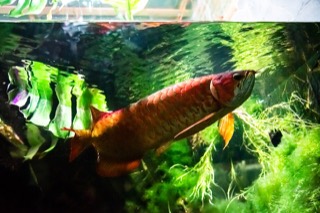 Asian Arowana (reference photo)

Species Data
- Classification
- Osteoglossiformes / Osteoglossidae Source
- Size
- Adults reach about 90 cm
- Diet
- Carnivore Adults are piscivorous, preying on other fish, while juveniles feed mainly on insects; in captivity it prefers live food such as goldfish, shrimp, and crickets
- Distribution
- Native to Southeast Asia, inhabiting slow-flowing blackwater rivers and wetlands across Indonesia (Kalimantan, Sumatra), Vietnam, Myanmar, Thailand, Cambodia, and Malaysia, though it is now extirpated from much of its former range. Source
- Sources
- ja.wikipedia.org en.wikipedia.org
Did You Know?
- Its ancestors diverged from those of the Australian arowanas roughly 140 million years ago during the Early Cretaceous, making it a member of an ancient fish lineage. Source
- Males practice mouthbrooding, carrying eggs and fry in their mouths to protect them, and the species takes a relatively long time to reach sexual maturity. Source
- Its resemblance to the Chinese dragon has made it highly prized as a symbol of good fortune across East Asia, with premium color varieties fetching prices of thousands of dollars. Source
Where to See This Species
Operating facilities registered on this site: Japan 5
Sunshine AquariumTokyoFrom Ikebukuro Station (Exit 35), walk along Sunshine 60 Street.
Aquamarine FukushimaFukushimaOpened in 2000
Kiryuugaoka DoubutsuenGunmaIf driving, set your car navigation to "Kiryugaoka Amusement Park" (Kiryugaoka Yuenchi) rather than "Kiryugaoka Zoo" to reach the parking lot (searching by the zoo name may give an incorrect route).
Noichi Zoological Park of Kochi PrefectureKochiA 20-minute walk or 13-minute rental-bicycle ride from Noichi Station on the Tosa Kuroshio Railway Gomen-Nahari Line.
Conservation Story
Conservation Status
Endangered (EN)
Sources
Support Conservation
A visit is a small, positive way to support the daily lives of the animals you care about.
- Visit
- A visit itself helps support the facility.
- Animal Supporter Programs & Giving
- Find ways to support the facility through its official website.
- Furusato Nozei
- Municipally run facilities may share official guidance for this Japanese hometown-tax program.
FAQ
- Why is the Asian arowana so valuable in the aquarium trade?
- Its dragon-like appearance made it a powerful symbol of good fortune in East Asian culture, and demand for rare color varieties has pushed prices for premium specimens into the thousands of dollars. Source
- How does the Asian arowana care for its young?
- Males are mouthbrooders, holding fertilized eggs and newly hatched fry inside their mouths to protect them until they are large enough to fend for themselves. Source
- How many operating facilities are registered here?
- Operating facilities registered on this site: Japan 5 Source
Books & gear
Source: ja.wikipedia.org en.wikipedia.org