Bald Eagleハクトウワシ
Haliaeetus leucocephalusLC— Least Concern
The bald eagle is North America's iconic sea eagle, a powerful fish-hunting raptor found from Alaska to northern Mexico. Once endangered by DDT poisoning and habitat loss, it recovered dramatically under conservation protection and has been the national bird and symbol of the United States since 1782.
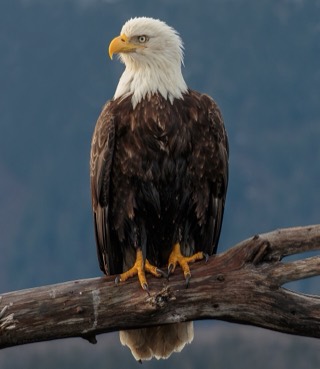 Bald Eagle (reference photo)
_Kachemak_Bay,_Alaska.jpg)
Species Data
- Classification
- Accipitriformes / Accipitridae Source
- Size
- 70–102 cm
- Weight
- 3–6.3 kg (females average about 5.6 kg, males about 4.1 kg)
- Lifespan
- Average about 20 years in the wild, record 38 years; some captive birds live even longer
- Diet
- Carnivore Opportunistic predator feeding mainly on fish (56% of the diet), as well as waterfowl, mammals, reptiles, and carrion
- Distribution
- Found across most of Canada and Alaska, all of the contiguous United States, and northern Mexico; it is the only sea eagle endemic to North America. Source
- Sources
- ja.wikipedia.org en.wikipedia.org
Did You Know?
- It builds the largest nest of any North American bird; the largest recorded example, in Florida, measured 2.9 m wide and 6.1 m deep and weighed up to a metric ton. Source
- Once on the brink of extirpation in the contiguous United States due to DDT and hunting, conservation measures allowed the population to recover, and it was removed from the U.S. endangered species list in 2007. Source
Where to See This Species
Operating facilities registered on this site: Japan 4
Adventure WorldWakayamaOpened in 1978
Kushiroshi DoubutsuenHokkaidoAbout 55 minutes from JR Kushiro Station by Akan Bus, or about 27 minutes (18 km) by car, taxi, or rental car.
Hamamatsu Zoological GardensShizuokaOpened in 1950
Higashiyama Zoo and Botanical GardensAichiOpened in 1937
Conservation Story
Conservation Status
Least Concern (LC)
Sources
Support Conservation
A visit is a small, positive way to support the daily lives of the animals you care about.
- Visit
- A visit itself helps support the facility.
- Animal Supporter Programs & Giving
- Find ways to support the facility through its official website.
- Furusato Nozei
- Municipally run facilities may share official guidance for this Japanese hometown-tax program.
FAQ
- Is the bald eagle actually bald?
- No — "bald" is an old English word meaning "white," referring to the adult's white head and tail feathers, not an absence of feathers. Source
- What does a bald eagle eat?
- It is an opportunistic hunter and scavenger whose diet is mostly fish, supplemented by waterfowl, mammals, reptiles, and carrion. Source
- How many operating facilities are registered here?
- Operating facilities registered on this site: Japan 4 Source
Books & gear
Source: ja.wikipedia.org en.wikipedia.org