Crested Ibisトキ
Nipponia nipponEN— Endangered
The crested ibis is a striking white-and-pink wading bird once thought extinct, rediscovered in China in 1981 with only a handful of wild birds remaining. Decades of captive breeding and reintroduction in China, Japan's Sado Island, and South Korea have brought it back from the edge, though it remains Endangered.
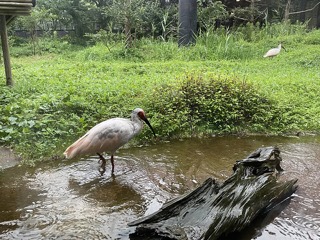 Crested Ibis (reference photo)

Species Data
- Classification
- Pelecaniformes / Threskiornithidae Source
- Size
- 70–80 cm
- Weight
- No data recorded
- Lifespan
- Typically said to be around 15 years, but "Kin," the last Japanese-born crested ibis, lived to an estimated 36
- Diet
- Carnivore Probes the mud of wetlands and rice paddies with its highly sensitive bill, preying on loaches, freshwater crabs, frogs, insects, tadpoles, and pond snails
- Distribution
- Historically widespread across eastern China, Korea, Japan, and Russia's Far East; today restricted to Yangxian County in Shaanxi Province, China, with reintroduced populations on Japan's Sado Island and Noto Peninsula, and in South Korea. Source
- Sources
- ja.wikipedia.org en.wikipedia.org
Did You Know?
- Before the breeding season, from around late January it secretes a powdery substance and rubs it onto its own feathers after bathing, deliberately staining them black. Source
- It was believed extinct until wild birds were rediscovered in China in 1981; reintroduction on Japan's Sado Island has since brought the population there to nearly 500 birds by June 2022. Source
Where to See This Species
Operating facilities registered on this site: Japan 4
Ishikawa DoubutsuenIshikawaAbout 60 minutes from the Kanazawa-Morimoto Interchange on the Hokuriku Expressway, about 40 minutes from the Kanazawa-Nishi Interchange, and about 20 minutes from the Komatsu Interchange.
Ichikawashi DoushokubutsuenChibaAddress: 284-1 Omachi, Ichikawa, Chiba.
Conservation Story
Conservation Status
Endangered (EN)
Sources
Support Conservation
A visit is a small, positive way to support the daily lives of the animals you care about.
- Visit
- A visit itself helps support the facility.
- Animal Supporter Programs & Giving
- Find ways to support the facility through its official website.
- Furusato Nozei
- Municipally run facilities may share official guidance for this Japanese hometown-tax program.
FAQ
- Why did the crested ibis nearly go extinct?
- Habitat loss and pesticide use decimated wetland foraging grounds across its range in China, Korea, and Japan; the last wild Japanese bird died in 2003, and the species survived only through a small remnant Chinese population rediscovered in 1981. Source
- Why does the crested ibis turn its feathers black before breeding?
- It secretes a dark, powdery substance from glands on its head and neck and rubs it over its plumage after bathing, staining its normally white feathers gray-black for the breeding season. Source
- How many operating facilities are registered here?
- Operating facilities registered on this site: Japan 4 Source
Books & gear
Source: ja.wikipedia.org en.wikipedia.org