Fennec Foxフェネック
Vulpes zerdaLC— Least Concern
The fennec fox is the smallest canid in the world, instantly recognizable by ears that can reach 10 cm — disproportionately large relative to its body, helping it dissipate heat and detect prey in the Sahara Desert. A nocturnal omnivore, it hunts small vertebrates and insects alone and gets most of its water from its food. Fennec foxes mate for life and dig extensive multi-entrance burrows. The IUCN classifies the species as Least Concern, though local populations face pressure from capture for the pet and exhibition trade and habitat disturbance from development.
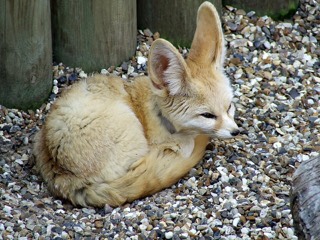 Fennec Fox (reference photo)

Species Data
- Classification
- Carnivora / Canidae Source
- Size
- Body length about 30–41 cm, ears about 9–10 cm, tail about 23–25 cm; the smallest species of canid
- Weight
- About 1–2 kg
- Lifespan
- Wild: up to 10 years; captive: about 12–14 years (some sources give 14 years for males and 13 for females)
- Diet
- Omnivore Omnivorous, eating small mammals, birds and their eggs, reptiles (geckos, skinks, etc.), insects, and plant leaves, roots, and fruit; hunts alone and obtains water from its prey
- Activity
- Nocturnal, becoming active in the cool of night to avoid heat and limit water loss, though it sometimes basks in the morning sun
- Distribution
- The fennec fox is native to the Sahara Desert of North Africa, including Morocco, Mauritania, Western Sahara, Algeria, Tunisia, Libya, Egypt, and the Sinai Peninsula. Source
- Sources
- ja.wikipedia.org en.wikipedia.org
Did You Know?
- Fennec foxes can leap 60 to 70 cm vertically and up to 120 cm horizontally. Source
- Antoine de Saint-Exupéry is said to have drawn inspiration from the fennec fox's large ears when writing the fox character in 'The Little Prince.' Source
- Their burrows can span as much as 120 square meters with up to 15 entrances, sometimes interconnecting with the dens of neighboring family groups. Source
Where to See This Species
Operating facilities registered on this site: Japan 4
Kyoto City ZooKyotoOpened in 1903
Saitamakenkodomodoubutsu Shizen KouenSaitamaOpened in 1980
Ichikawashi DoushokubutsuenChibaAddress: 284-1 Omachi, Ichikawa, Chiba.
Aquamarine FukushimaFukushimaOpened in 2000
Source links to official sites, official YouTube channels, and news aggregators such as Zoo Ring. Visit the publisher for the full item.
Conservation Story
Conservation Status
Least Concern (LC)
Sources
Support Conservation
A visit is a small, positive way to support the daily lives of the animals you care about.
- Visit
- A visit itself helps support the facility.
- Animal Supporter Programs & Giving
- Find ways to support the facility through its official website.
- Furusato Nozei
- Municipally run facilities may share official guidance for this Japanese hometown-tax program.
FAQ
- Why do fennec foxes have such big ears?
- Their oversized ears, up to 10 cm long, help radiate excess body heat in the desert climate and give them exceptionally sensitive hearing for detecting prey moving underground or at a distance. Source
- How do fennec foxes survive in the desert without drinking much water?
- They obtain most of the moisture they need from the small mammals, insects, and plants they eat, and their nocturnal habits help them avoid the extreme daytime heat that would cause rapid water loss. Source
- Are fennec foxes endangered?
- No, the IUCN classifies them as Least Concern, though they are listed on CITES Appendix II and face localized threats from trapping for the pet trade, road construction, and mining activity. Source
- How many operating facilities are registered here?
- Operating facilities registered on this site: Japan 4 Source
Books & gear
Source: zoo.city.kyoto.lg.jp www.parks.or.jp www.city.ichikawa.lg.jp www.iucnredlist.org