Giant Clamシャコガイ
Tridacna gigasVU— Vulnerable
The giant clam is the world's largest living bivalve, its huge fluted shell housing a vividly colored mantle packed with symbiotic algae that supply most of its nutrition. Native to Indo-Pacific coral reefs, it can live for over a century but has been badly depleted across much of its range by overharvesting.
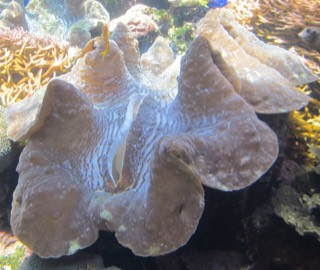 Giant Clam (reference photo)
,_Waikiki_Aquarium.JPG)
Species Data
- Classification
- Cardiida / Cardiidae Source
- Size
- A record shell length of 137 cm makes it the largest bivalve in the world
- Weight
- Live weight has been reported to reach 250–340 kg at maximum
- Lifespan
- Average lifespan in the wild exceeds 100 years
- Diet
- Filter feeder Obtains 65–70% of its nutrition from the photosynthetic products of zooxanthellae living in its mantle, and the rest by filter feeding on plankton
- Distribution
- Native to coral reefs across the Indo-Pacific, found on flat sandy or rubble substrates down to about 20 m depth; in Japan it occurs in the Yaeyama Islands, though populations have declined sharply across much of its historic range due to overharvesting. Source
- Sources
- ja.wikipedia.org en.wikipedia.org
Did You Know?
- The mantle edge holds hundreds to thousands of light-sensitive eyespots using multiple types of photoreceptors, letting the clam detect approaching shadows and snap its shell shut. Source
- During spawning, an adult can release more than 500 million eggs at once, synchronizing with nearby individuals around the high tides near full and new moons. Source
- Because the shell cannot fully close, the enduring myth that giant clams can trap and drown a diver's foot is considered false. Source
Where to See This Species
Operating facilities registered on this site: Japan 0
Verified individual animals and facilities will be added as official information becomes available.
Conservation Story
Conservation Status
Vulnerable (VU)
Sources
Support Conservation
A visit is a small, positive way to support the daily lives of the animals you care about.
- Visit
- A visit itself helps support the facility.
- Animal Supporter Programs & Giving
- Find ways to support the facility through its official website.
FAQ
- How big can a giant clam grow?
- The largest recorded shell measured about 137 cm, with the living animal estimated to have weighed up to 250-340 kg, making it the largest living bivalve mollusk. Source
- How does a giant clam get most of its food?
- About 65-70% of its nutrition comes from symbiotic zooxanthellae algae living in its mantle tissue, which produce sugars through photosynthesis; the rest comes from filter-feeding on plankton. Source
- Can a giant clam trap a diver?
- No. Its shell cannot close completely, so the popular myth that it can clamp shut on a diver's limb is false. Source
- How many operating facilities are registered here?
- Operating facilities registered on this site: Japan 0 Source
Books & gear
Source: ja.wikipedia.org en.wikipedia.org