Giant Oceanic Manta Rayオニイトマキエイ
Mobula birostrisEN— Endangered
The giant oceanic manta ray is among the largest living rays, with a disc width typically around 4.5 meters and exceptional individuals exceeding 7 meters. Found in tropical, subtropical, and temperate waters worldwide, it filter-feeds on plankton and small fish while swimming with its mouth agape, and it possesses the largest brain of any fish. Slow to reproduce and heavily targeted for its gill rakers, it is classified as Endangered.
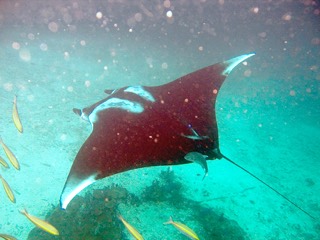 Giant Oceanic Manta Ray (reference photo)

Species Data
- Classification
- Myliobatiformes / Mobulidae Source
- Size
- Disc width usually about 4.5 m, reaching a maximum of about 7–9.1 m
- Weight
- Up to about 3 tons
- Lifespan
- Estimated at more than 20 years, with some claims of over 50 or even over 100 years
- Diet
- Filter feeder Planktivorous; swims with its mouth wide open, taking in plankton with seawater and filtering it out through the gills. A diet including deep-sea fish has also been reported
- Distribution
- Circumglobal in tropical, subtropical, and temperate waters, ranging as far north as southern California and Japan and as far south as Peru, South Africa, and New Zealand. Source
- Sources
- ja.wikipedia.org en.wikipedia.org
Did You Know?
- It has the largest brain of any fish, weighing up to about 200 g—five to ten times larger than a whale shark's—and a 2016 study observed behavior in front of a mirror suggestive of possible self-recognition. Source
- It is ovoviviparous with a gestation period of about 13 months, typically producing just one or two pups at a time, and females breed only once every two to three years, making population recovery extremely slow. Source
Where to See This Species
Operating facilities registered on this site: Japan 1
Okinawa Churaumi AquariumOkinawaOpened in 2002
Conservation Story
Conservation Status
Endangered (EN)
Sources
Support Conservation
A visit is a small, positive way to support the daily lives of the animals you care about.
- Visit
- A visit itself helps support the facility.
- Animal Supporter Programs & Giving
- Find ways to support the facility through its official website.
- Furusato Nozei
- Municipally run facilities may share official guidance for this Japanese hometown-tax program.
FAQ
- Why is the giant oceanic manta ray endangered?
- It reproduces very slowly, with females typically giving birth to just one pup every two to three years after a 12-13 month gestation, while facing heavy fishing pressure for its gill rakers, which are valued in traditional Chinese medicine, along with gillnet entanglement and pollution. Source
- How intelligent is the giant oceanic manta ray?
- It has the largest brain of any fish, weighing up to 200 grams—five to ten times larger than a whale shark's—and a 2016 study found it showed behavior in front of a mirror suggestive of possible self-recognition. Source
- How many operating facilities are registered here?
- Operating facilities registered on this site: Japan 1 Source
Books & gear
Source: churaumi.okinawa www.iucnredlist.org