Green Anacondaオオアナコンダ
Eunectes murinusLC— Least Concern
The green anaconda is the world's heaviest snake, a non-venomous constrictor native to the Amazon basin and other river systems of northern South America. It preys on fish, birds, and mammals of almost any size, with large individuals known to take down caimans and even jaguars, and gives live birth to litters of 20 to 80 young. It is currently assessed as Least Concern, though a population from the Orinoco region was recently classified as a distinct species in 2024.
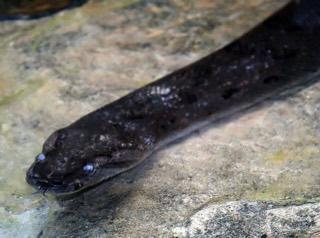 Green Anaconda (reference photo)

Species Data
- Classification
- Squamata / Boidae Source
- Size
- Total length about 3–6 m, record 6.32 m
- Weight
- About 30–80 kg; individuals over 5 m can approach 100 kg
- Lifespan
- Said to be about 10 years in the wild, but exceeds 30 years in captivity, with a record of 37 years 317 days
- Diet
- Carnivore Carnivorous constrictor preying on almost any animal, including fish, amphibians, birds, mammals, and reptiles; large individuals may attack caimans and tapirs
- Distribution
- Found in South America east of the Andes, including Colombia, Venezuela, the Guianas, Ecuador, Peru, Bolivia, Brazil, Trinidad, and northern Paraguay. Source
- Sources
- ja.wikipedia.org en.wikipedia.org
Did You Know?
- It is the world's heaviest living snake, a non-venomous constrictor documented preying on large animals such as caimans and even jaguars. Source
- It is ovoviviparous, giving birth to 20–80 live young at once, and females have been documented reproducing via facultative parthenogenesis when no males are available. Source
Where to See This Species
Operating facilities registered on this site: Japan 2
Sapporoshimaruyama DoubutsuenHokkaidoOpened in 1951
Higashiyama Zoo and Botanical GardensAichiOpened in 1937
Conservation Story
Conservation Status
Least Concern (LC)
Sources
Support Conservation
A visit is a small, positive way to support the daily lives of the animals you care about.
- Visit
- A visit itself helps support the facility.
- Animal Supporter Programs & Giving
- Find ways to support the facility through its official website.
- Furusato Nozei
- Municipally run facilities may share official guidance for this Japanese hometown-tax program.
FAQ
- How big can a green anaconda get?
- It can reach lengths of over 6 m and is considered the heaviest snake species in the world, with large females weighing 30–80 kg or more. Source
- Does the green anaconda lay eggs?
- No—it is ovoviviparous, giving birth to 20 to 80 live young at a time rather than laying eggs. Source
- How many operating facilities are registered here?
- Operating facilities registered on this site: Japan 2 Source
Books & gear
Source: ja.wikipedia.org en.wikipedia.org