Grevy's Zebraグレビーシマウマ
Equus grevyiEN— Endangered
Grévy's zebra (Equus grevyi) is the largest and most endangered of the three zebra species, distinguished by its narrow stripes, large rounded ears, and stripe-free white belly. Now confined mainly to northern Kenya, its population has collapsed from roughly 15,000 in the 1970s to around 2,250 today, and it is classified as Endangered by the IUCN.
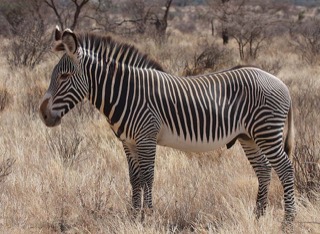 Grevy's Zebra (reference photo)

Species Data
- Classification
- Perissodactyla / Equidae Source
- Size
- 240–300 cm
- Weight
- 350–450 kg
- Lifespan
- Wild: estimated 18–30 years
- Diet
- Herbivore Herbivorous, feeding mainly on grasses; drinks daily when water is plentiful but can go without water for up to a week
- Activity
- Crepuscular; rests in the shade during the day
- Distribution
- Now restricted to northern Kenya and isolated populations in southern Ethiopia; the species has been extirpated from Djibouti, Somalia, and Sudan. Source
- Sources
- ja.wikipedia.org en.wikipedia.org
Did You Know?
- It is the largest of all zebra species and, unusually, lacks stripes on its belly. Source
- The population has crashed from an estimated 15,000 in the 1970s to about 2,250 by 2020, and it is now listed as Endangered. Source
- The species was named in 1882 after Jules Grévy, then President of France, who received one as a gift. Source
Where to See This Species
Operating facilities registered on this site: Japan 5
Ishikawa DoubutsuenIshikawaAbout 60 minutes from the Kanazawa-Morimoto Interchange on the Hokuriku Expressway, about 40 minutes from the Kanazawa-Nishi Interchange, and about 20 minutes from the Komatsu Interchange.
Yokohama Shiritsu Nogeyama DoubutsuenKanagawaOpened in 1951
Kyoto City ZooKyotoOpened in 1903
Chiba Zoological ParkChibaOpened in 1985
Source links to official sites, official YouTube channels, and news aggregators such as Zoo Ring. Visit the publisher for the full item.
Conservation Story
Conservation Status
Endangered (EN)
Sources
Support Conservation
A visit is a small, positive way to support the daily lives of the animals you care about.
- Visit
- A visit itself helps support the facility.
- Animal Supporter Programs & Giving
- Find ways to support the facility through its official website.
- Furusato Nozei
- Municipally run facilities may share official guidance for this Japanese hometown-tax program.
FAQ
- How is Grévy's zebra different from other zebras?
- It is the largest zebra species, with notably narrower stripes, large rounded ears, and a white, unstriped belly. Source
- Why is Grévy's zebra endangered?
- Habitat loss, competition with livestock for water and grazing, and past hunting caused the population to fall from about 15,000 in the 1970s to roughly 2,250 by 2020. Source
- How many operating facilities are registered here?
- Operating facilities registered on this site: Japan 5 Source
Books & gear
Source: ja.wikipedia.org en.wikipedia.org