Hawksbill Sea Turtleタイマイ
Eretmochelys imbricataCR— Critically Endangered
The hawksbill sea turtle is a coral-reef specialist found throughout the tropical Indian, Atlantic, and Pacific Oceans, easily recognized by its hawk-like beak and overlapping shell scutes. Sponges make up 70–95% of its diet, an unusually narrow ecological niche among sea turtles. Centuries of hunting for the tortoiseshell trade—an estimated 8.98 million individuals killed between 1844 and 1992—have left it Critically Endangered on the IUCN Red List.
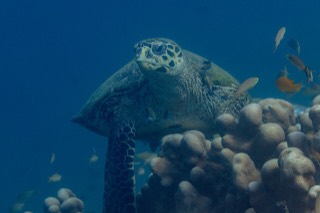 Hawksbill Sea Turtle (reference photo)
,_Anilao,_Filipinas,_2023-08-21,_DD_27.jpg)
Species Data
- Classification
- Testudines / Cheloniidae Source
- Size
- Carapace length about 53.3–93.5 cm
- Weight
- Average about 30–80 kg, record 127 kg
- Diet
- Carnivore Has a specialized diet centered on sponges, which make up 70–95% of its food; also eats squid and seaweed
- Distribution
- Found in tropical waters of the Indian, Atlantic, and Pacific Oceans, favoring coral reef habitats, with major nesting sites in Indonesia, the Seychelles, the Maldives, and the Caribbean. Source
- Sources
- ja.wikipedia.org en.wikipedia.org
Did You Know?
Where to See This Species
Operating facilities registered on this site: Japan 2
Okinawa Churaumi AquariumOkinawaOpened in 2002
Source links to official sites, official YouTube channels, and news aggregators such as Zoo Ring. Visit the publisher for the full item.
Conservation Story
Conservation Status
Critically Endangered (CR)
Sources
Support Conservation
A visit is a small, positive way to support the daily lives of the animals you care about.
- Visit
- A visit itself helps support the facility.
- Animal Supporter Programs & Giving
- Find ways to support the facility through its official website.
- Furusato Nozei
- Municipally run facilities may share official guidance for this Japanese hometown-tax program.
FAQ
- Why is the hawksbill sea turtle critically endangered?
- It was hunted for centuries for its overlapping shell plates, used in the tortoiseshell trade; an estimated 8.98 million individuals were killed between 1844 and 1992. Source
- What does a hawksbill sea turtle eat?
- Sea sponges make up 70–95% of its diet, supplemented by algae, jellyfish, and other invertebrates. Source
- How many operating facilities are registered here?
- Operating facilities registered on this site: Japan 2 Source
Books & gear
Source: ja.wikipedia.org en.wikipedia.org