Helmeted Guineafowlホロホロチョウ
Numida meleagrisLC— Least Concern
The helmeted guineafowl is a large, gregarious galliform native to sub-Saharan Africa, easily recognized by its bare grey-blue head topped with a bony casque and its grey-black plumage speckled with white. A ground forager, it switches between an insect-heavy diet during the breeding season and seeds, tubers, and grain the rest of the year. Classified as Least Concern, it is also widely kept as poultry around the world for its hardiness.
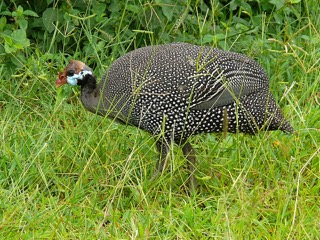 Helmeted Guineafowl (reference photo)
_(18045235579).jpg)
Species Data
- Classification
- Galliformes / Numididae Source
- Size
- Total length 53–58 cm
- Weight
- About 1.3 kg
- Lifespan
- Wild: up to about 12 years
- Diet
- Omnivore Omnivorous. Outside the breeding season it eats corn, bulbs, seeds, and crop residue; during the breeding season it feeds on invertebrates such as insects (more than 80% of the diet)
- Activity
- Ground-dwelling; except for incubating females, it sleeps in trees at night
- Distribution
- Native to sub-Saharan Africa; domesticated populations are now established throughout the West Indies, the Americas, Australia, and Europe. Source
- Sources
- ja.wikipedia.org en.wikipedia.org
Did You Know?
- While flocks typically number around 25 birds, gatherings of more than 2,000 individuals have been recorded. Source
- They prefer running to flying when threatened and can cover more than 10 km on foot in a single day. Source
- As a domestic fowl it is known for its strong resistance to diseases such as Newcastle disease and blackhead disease, making it easy to keep. Source
Where to See This Species
Operating facilities registered on this site: Japan 4
Kyoto City ZooKyotoOpened in 1903
Kiryuugaoka DoubutsuenGunmaIf driving, set your car navigation to "Kiryugaoka Amusement Park" (Kiryugaoka Yuenchi) rather than "Kiryugaoka Zoo" to reach the parking lot (searching by the zoo name may give an incorrect route).
Sendaishiyagiyama Doubutsu KouenMiyagiTake the Sendai Subway Tozai Line to Yagiyama Zoological Park Station; the zoo is right by the elevator from Central Exit 1 (about 12 minutes from Sendai Station).
Tennoji ZooOsakaOpened in 1915
Former facilities
Namegawaai LandChibaOpened in 1964
Closed: 2001-08-31 Official Site
Source links to official sites, official YouTube channels, and news aggregators such as Zoo Ring. Visit the publisher for the full item.
Conservation Story
Conservation Status
Least Concern (LC)
Sources
Support Conservation
A visit is a small, positive way to support the daily lives of the animals you care about.
- Visit
- A visit itself helps support the facility.
- Animal Supporter Programs & Giving
- Find ways to support the facility through its official website.
- Furusato Nozei
- Municipally run facilities may share official guidance for this Japanese hometown-tax program.
FAQ
- What do helmeted guineafowl eat?
- They are omnivorous ground foragers: during the breeding season over 80% of their diet is insects and other invertebrates, while at other times they eat seeds, tubers, and agricultural grain. Source
- How far can a helmeted guineafowl travel in a day?
- It is a strong walker that can cover more than 10 km daily, preferring to run from danger rather than fly. Source
- Where is the helmeted guineafowl originally from?
- It is native to sub-Saharan Africa, though domesticated populations are now found worldwide, including the West Indies, the Americas, Australia, and Europe. Source
- How many operating facilities are registered here?
- Operating facilities registered on this site: Japan 4 Source
Books & gear
Source: ja.wikipedia.org en.wikipedia.org