Hyacinth Macawスミレコンゴウインコ
Anodorhynchus hyacinthinusVU— Vulnerable
The hyacinth macaw is the largest flying parrot species in the world, with vivid cobalt-blue plumage and bare yellow skin around the eyes and lower mandible. Native to three separate regions of Brazil and neighboring countries, it feeds almost exclusively on palm nuts, which its powerful beak can crack open. Classified as Vulnerable due to habitat loss and historical trapping for the pet trade, it is protected under CITES Appendix I.
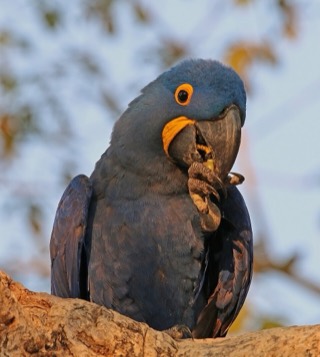 Hyacinth Macaw (reference photo)
_head.JPG)
Species Data
- Classification
- Psittaciformes / Psittacidae Source
- Size
- Total length 90–100 cm (the largest of the parrots)
- Weight
- 1.2–1.7 kg
- Lifespan
- Captive records of over 50 years
- Diet
- Herbivore Mainly the seeds of palms such as acuri and bocaiuva; its powerful bill can also crack Brazil nuts and macadamia nuts
- Distribution
- Endemic to South America, found in three main disjunct populations: the Pantanal region of Brazil/Bolivia/Paraguay, the cerrado of eastern Brazil, and areas along Amazonian river systems. Source
- Sources
- ja.wikipedia.org en.wikipedia.org
Did You Know?
- At about one meter long, it is the largest species of parrot in the world. Source
- It shows limited tool use, using chewed leaves or pieces of wood to help stabilize nuts while cracking them. Source
- Listed on CITES Appendix I in 1987, the species is now the focus of conservation efforts due to declining populations. Source
Where to See This Species
Operating facilities registered on this site: Japan 2
Chiba Zoological ParkChibaOpened in 1985
Higashiyama Zoo and Botanical GardensAichiOpened in 1937
Conservation Story
Conservation Status
Vulnerable (VU)
Sources
Support Conservation
A visit is a small, positive way to support the daily lives of the animals you care about.
- Visit
- A visit itself helps support the facility.
- Animal Supporter Programs & Giving
- Find ways to support the facility through its official website.
- Furusato Nozei
- Municipally run facilities may share official guidance for this Japanese hometown-tax program.
FAQ
- Why is the hyacinth macaw considered special among parrots?
- At about one meter in length, it is the largest species of parrot in the world. Source
- What does the hyacinth macaw eat?
- It feeds mainly on palm nuts, especially from acuri and bocaiuva palms, cracking them open with a beak strong enough to break Brazil nuts and macadamia nuts. Source
- Is the hyacinth macaw endangered?
- It is classified as Vulnerable on the IUCN Red List and listed under CITES Appendix I, with a wild population estimated at around 6,500 birds. Source
- How many operating facilities are registered here?
- Operating facilities registered on this site: Japan 2 Source
Books & gear
Source: ja.wikipedia.org en.wikipedia.org