Japanese Abaloneクロアワビ
Haliotis discusDD— Data Deficient
This large abalone is a prized food species found along the rocky, wave-exposed coasts of Japan and Korea. Grazing mainly at night on kelp and other brown algae, it grows slowly and can live for decades, but overharvesting and poaching have put pressure on wild populations.
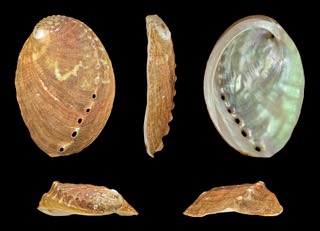 Japanese Abalone (reference photo)

Species Data
- Classification
- Archaeogastropoda / Haliotidae Source
- Size
- Oval shell about 5–20 cm in length and 3–17 cm in width
- Lifespan
- Said to be up to about 30 years
- Diet
- Herbivore Eats brown algae such as arame, wakame, and kelp
- Activity
- Nocturnal; hides in dark places such as rock crevices and caves during the day
- Distribution
- Found along wave-exposed rocky coasts of Japan, from the Boso Peninsula to Kyushu on the Pacific side and from southern Hokkaido to Kyushu on the Sea of Japan side, including the Izu Islands. Source
Did You Know?
- It is a slow-growing species, taking roughly three to four years to reach a shell length of about 10 cm. Source
- Prized as a premium food ingredient served as sashimi, in sake-steamed dishes, or grilled as steak, it is also a frequent target of illegal poaching. Source
- One of its old names, "ogai" (honorable shell), reflects its traditional use as an offering to the Imperial Household and Ise Grand Shrine. Source
Where to See This Species
Operating facilities registered on this site: Japan 0
Verified individual animals and facilities will be added as official information becomes available.
Conservation Story
Conservation Status
Data Deficient (DD)
Sources
Support Conservation
A visit is a small, positive way to support the daily lives of the animals you care about.
- Visit
- A visit itself helps support the facility.
- Animal Supporter Programs & Giving
- Find ways to support the facility through its official website.
FAQ
- How fast does this abalone grow?
- It grows slowly, taking about three to four years to reach a shell length of roughly 10 cm. Source
- What does it eat?
- It feeds mainly at night on brown algae such as kelp and wakame, staying hidden in rock crevices during the day. Source
- How long can it live?
- Individuals can live for up to about 30 years. Source
- How many operating facilities are registered here?
- Operating facilities registered on this site: Japan 0 Source
Books & gear
Source: ja.wikipedia.org en.wikipedia.org