Goliath Beetleゴライアスオオツノハナムグリ
Goliathus goliatusNE— Not Evaluated
Goliath beetles are among the heaviest insects in the world, native to the tropical forests of Africa. Adults feed on tree sap and fruit and are unusual among beetles for flying with their hard wing cases closed, while males use a Y-shaped head horn to lever rivals aside in contests over food and mates.
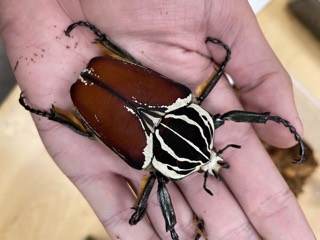 Goliath Beetle (reference photo)
,_Entomica.jpg)
Species Data
- Classification
- Coleoptera / Scarabaeidae Source
- Size
- Males 65–110 mm, females 50–75 mm in body length; large individuals exceed 10 cm
- Weight
- Some larvae exceed 100 g, and adults are considered among the heaviest insects in the world
- Lifespan
- Some captive individuals live about a year after emergence
- Diet
- Herbivore Adults feed mainly on tree sap and ripe fruit; larvae prefer protein-rich humus
- Distribution
- Native to tropical forests across Africa, with different species within the genus Goliathus occupying Central or West African ranges. Source
- Sources
- ja.wikipedia.org en.wikipedia.org
Did You Know?
- It ranks among the heaviest insects on Earth, with larvae sometimes exceeding 100 grams in weight. Source
- Unusually for a beetle, it flies with its hard elytra closed, moving with surprising speed and agility for such a large insect. Source
- Males bear a Y-shaped horn on the head, used as a pry bar to lever rival males away during fights over feeding sites or mates. Source
Where to See This Species
Operating facilities registered on this site: Japan 0
Verified individual animals and facilities will be added as official information becomes available.
Conservation Story
Conservation Status
Not Evaluated (NE)
Sources
Support Conservation
A visit is a small, positive way to support the daily lives of the animals you care about.
- Visit
- A visit itself helps support the facility.
- Animal Supporter Programs & Giving
- Find ways to support the facility through its official website.
FAQ
- Why is the Goliath beetle considered one of the heaviest insects?
- Its larvae can weigh more than 100 grams, and adults, which can exceed 10 cm in body length, are regularly cited among the heaviest insects known. Source
- What does the Goliath beetle eat?
- Adults feed mainly on tree sap and ripe fruit, while the high-protein-hungry larvae develop in decaying organic matter. Source
- Where is the Goliath beetle found?
- It is native to tropical forests across Africa, with different species in the genus occupying Central or West African ranges; live imports into Japan are restricted. Source
- How many operating facilities are registered here?
- Operating facilities registered on this site: Japan 0 Source
Books & gear
Source: ja.wikipedia.org en.wikipedia.org