Japanese Tree Frogニホンアマガエル
Dryophytes japonicusLC— Least Concern
The Japanese tree frog is a small, adaptable frog native to Japan, the Korean Peninsula, and eastern China, commonly found in forests, wetlands, and rice paddies. It grows to only about 2-4.5 cm long, can shift its skin color to blend with its surroundings, and preys on small insects and spiders. Widespread and stable in the wild, it is listed as Least Concern by the IUCN.
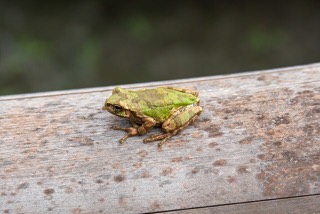 Japanese Tree Frog (reference photo)

Species Data
- Classification
- Anura / Hylidae Source
- Size
- Body length about 2.0–4.5 cm; females are larger than males, which are usually under 4 cm
- Lifespan
- Said to be a few years in the wild
- Diet
- Insectivore Preys on small insects, spiders, and similar animals
- Activity
- Active from spring through fall; hibernates underground in winter
- Distribution
- Native to Japan (Hokkaido, Honshu, Shikoku, and Kyushu), the Korean Peninsula, and eastern China, inhabiting forests, wetlands, and rice paddies near water. Source
- Sources
- ja.wikipedia.org en.wikipedia.org
Did You Know?
- It can change its skin color from green to a mottled grayish-brown to blend in with its surroundings. Source
- It is known for "rain calling" — vocalizing even outside the breeding season, including during the day, when rain is approaching. Source
- Round adhesive pads on every toe let it leap between branches and cling to smooth vertical surfaces such as glass. Source
Where to See This Species
Operating facilities registered on this site: Japan 2
Kiryuugaoka DoubutsuenGunmaIf driving, set your car navigation to "Kiryugaoka Amusement Park" (Kiryugaoka Yuenchi) rather than "Kiryugaoka Zoo" to reach the parking lot (searching by the zoo name may give an incorrect route).
Higashiyama Zoo and Botanical GardensAichiOpened in 1937
Conservation Story
Conservation Status
Least Concern (LC)
Sources
Support Conservation
A visit is a small, positive way to support the daily lives of the animals you care about.
- Visit
- A visit itself helps support the facility.
- Animal Supporter Programs & Giving
- Find ways to support the facility through its official website.
- Furusato Nozei
- Municipally run facilities may share official guidance for this Japanese hometown-tax program.
FAQ
- How big is the Japanese tree frog?
- Adults typically measure 2.0 to 4.5 cm in body length, with females larger than males, which are usually under 4 cm. Source
- Why does the Japanese tree frog sometimes call during the day?
- Beyond its breeding-season calls, it is known for "rain calling," vocalizing even in daytime when rain is approaching. Source
- How does the Japanese tree frog climb smooth surfaces like glass?
- Round adhesive pads on each toe allow it to grip smooth vertical surfaces and leap between branches. Source
- How many operating facilities are registered here?
- Operating facilities registered on this site: Japan 2 Source
Books & gear
Source: ja.wikipedia.org en.wikipedia.org