Magnificent Sea Anemoneハタゴイソギンチャク
Heteractis magnificaNE— Not Evaluated
This large sea anemone, found across the tropical Indo-Pacific on open coral reef edges, is famous for hosting more anemonefish species than almost any other host anemone. Its long, uniformly thick tentacles and vividly variable coloration, from electric blue to deep purple, make it a striking centerpiece of reef aquariums.
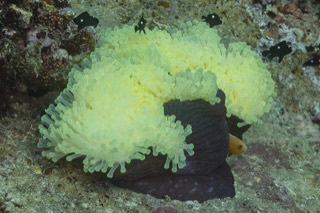 Magnificent Sea Anemone (reference photo)
,_Zanz%C3%ADbar,_Tanzania,_2024-05-30,_DD_48.jpg)
Species Data
- Classification
- Actiniaria / Stichodactylidae Source
- Size
- One of the larger sea anemones, with some individuals exceeding 50 cm in diameter when the tentacles are extended; the tentacles are long and nearly uniform in thickness from base to tip
- Diet
- Carnivore Captures small crustaceans, fish larvae, and similar prey with the stinging cells in its tentacles, and also obtains nutrition from the photosynthetic products of zooxanthellae living in its body
- Distribution
- Found throughout the tropical and subtropical Indo-Pacific, from the East African coast and Red Sea to Polynesia, and from southern Japan to Australia and New Caledonia, typically on open reef edges and slopes. Source
- Sources
- en.wikipedia.org churaumi.okinawa
Did You Know?
- It is a highly generalist host anemone, capable of hosting as many as 12 different anemonefish species worldwide, more than almost any other sea anemone. Source
- Its column color varies dramatically between individuals, ranging from electric blue and green to red, pink, purple, or brown. Source
- Besides sexual reproduction, it can also reproduce asexually by splitting its body into two separate individuals. Source
Where to See This Species
Operating facilities registered on this site: Japan 1
Okinawa Churaumi AquariumOkinawaOpened in 2002
Conservation Story
Conservation Status
Not Evaluated (NE)
Sources
Support Conservation
A visit is a small, positive way to support the daily lives of the animals you care about.
- Visit
- A visit itself helps support the facility.
- Animal Supporter Programs & Giving
- Find ways to support the facility through its official website.
- Furusato Nozei
- Municipally run facilities may share official guidance for this Japanese hometown-tax program.
FAQ
- How big can this sea anemone grow?
- Its oral disc can exceed 50 cm in diameter, with long tentacles of fairly uniform thickness from base to tip. Source
- How many species of clownfish can live in it?
- It is an unusually generalist host, capable of sheltering up to about 12 different anemonefish species across its range. Source
- How does it get its nutrition?
- It captures small crustaceans and fish with its stinging tentacles, and also draws energy from photosynthetic algae, called zooxanthellae, living in its tissue. Source
- How many operating facilities are registered here?
- Operating facilities registered on this site: Japan 1 Source
Books & gear
Source: ja.wikipedia.org en.wikipedia.org