Muskoxジャコウウシ
Ovibos moschatusLC— Least Concern
The muskox is a shaggy, cold-adapted bovid native to the Arctic tundra of Canada, Greenland, and Alaska, with reintroduced herds in Scandinavia and Siberia. Its defining defense against predators like wolves is a tight ring formation with calves shielded at the center. Its dense undercoat, qiviut, is among the warmest and softest natural fibers known, and the species is currently assessed as Least Concern by the IUCN.
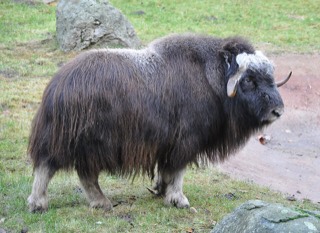 Muskox (reference photo)

Species Data
- Classification
- Artiodactyla / Bovidae Source
- Size
- Body length: males 201–246 cm, females 194–201 cm; shoulder height 110–150 cm
- Weight
- Males 263–650 kg, females 280–295 kg
- Lifespan
- 12–20 years
- Diet
- Herbivore Herbivorous, eating grasses, woody plants such as birch and willow, lichens, and mosses
- Activity
- Migrates seasonally, moving to riverside wetlands in summer and to high ground with little snow in winter
- Distribution
- Native to Arctic Canada, Greenland, and Alaska, with reintroduced populations in Norway (Svalbard), Sweden, and Siberia. Source
- Sources
- ja.wikipedia.org en.wikipedia.org
Did You Know?
- When threatened, adults form a defensive ring or semicircle facing outward, with calves protected in the center. Source
- Rival males charge at speeds up to 60 km/h before crashing their horns together in dominance battles. Source
- Muskoxen produce an exceptionally soft, insulating undercoat called qiviut, prized for its warmth and light weight. Source
Where to See This Species
Operating facilities registered on this site: Japan 0
Verified individual animals and facilities will be added as official information becomes available.
Conservation Story
Conservation Status
Least Concern (LC)
Sources
Support Conservation
A visit is a small, positive way to support the daily lives of the animals you care about.
- Visit
- A visit itself helps support the facility.
- Animal Supporter Programs & Giving
- Find ways to support the facility through its official website.
FAQ
- How do muskoxen defend themselves from predators?
- When threatened, adult muskoxen form a tight ring or semicircle facing outward with their horns, keeping calves protected inside the formation. Source
- What is qiviut?
- Qiviut is the muskox's fine, insulating undercoat, prized for being exceptionally soft, light, and warm — among the most valuable natural fibers in the world. Source
- Where do muskoxen live?
- Muskoxen are native to Arctic Canada, Greenland, and Alaska, and have also been reintroduced to Norway's Svalbard archipelago, Sweden, and Siberia. Source
- How many operating facilities are registered here?
- Operating facilities registered on this site: Japan 0 Source
Books & gear
Source: ja.wikipedia.org en.wikipedia.org