Mute Swanコブハクチョウ
Cygnus olorLC— Least Concern
The mute swan is a large, long-necked waterfowl native to Europe and temperate Asia, easily recognized by its orange bill topped with a black knob and its habit of holding its neck in an elegant S-curve. Despite its name, it is not silent—it hisses and grunts, and its wingbeats produce a distinctive humming sound audible from over a kilometer away. Introduced populations established outside its native range, including in North America, have become invasive in some areas.
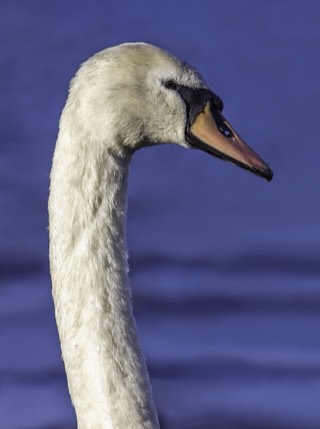 Mute Swan (reference photo)
_in_Bowness-on-Windermere,_England.jpg)
Species Data
- Classification
- Anseriformes / Anatidae Source
- Size
- Total length about 140–160 cm, wingspan 200–240 cm
- Weight
- Males average 10.6–11.87 kg / females average 8.5–9.67 kg
- Diet
- Herbivore Feeds mainly on aquatic and terrestrial plants, along with small amounts of aquatic insects, fish, and frogs
- Distribution
- Native to Europe and temperate Asia, with an estimated 500,000 birds in its native range at the end of the breeding season, including about 350,000 in Russia alone. Source
- Sources
- ja.wikipedia.org en.wikipedia.org
Did You Know?
- The black knob of bare skin at the base of the upper bill gives the species its Japanese name, kobu-hakucho ("knobbed swan"). Source
- The English name "mute swan" comes from the Western folk belief that the bird sings only as death approaches, but in reality it produces a variety of calls when needed. Source
- The distinctive humming sound of its wingbeats can be heard from a range of 1 to 2 km, serving as a contact signal. Source
Where to See This Species
Operating facilities registered on this site: Japan 3
Kiryuugaoka DoubutsuenGunmaIf driving, set your car navigation to "Kiryugaoka Amusement Park" (Kiryugaoka Yuenchi) rather than "Kiryugaoka Zoo" to reach the parking lot (searching by the zoo name may give an incorrect route).
Noichi Zoological Park of Kochi PrefectureKochiA 20-minute walk or 13-minute rental-bicycle ride from Noichi Station on the Tosa Kuroshio Railway Gomen-Nahari Line.
Himeji Shiritsu DoubutsuenHyogoOpened in 1951
Conservation Story
Conservation Status
Least Concern (LC)
Sources
Support Conservation
A visit is a small, positive way to support the daily lives of the animals you care about.
- Visit
- A visit itself helps support the facility.
- Animal Supporter Programs & Giving
- Find ways to support the facility through its official website.
- Furusato Nozei
- Municipally run facilities may share official guidance for this Japanese hometown-tax program.
FAQ
- Is the mute swan really silent?
- No—despite its name, it produces hisses, grunts, and other vocalizations, and its wingbeats create a distinctive humming sound audible from 1–2 km away. Source
- What does the mute swan eat?
- It feeds on a wide range of aquatic and land vegetation, supplemented by small amounts of aquatic insects, fish, and frogs. Source
- Where is the mute swan originally from?
- It is native to Europe and temperate Asia, with an estimated 500,000 birds in its native range, including around 350,000 in Russia alone. Source
- How many operating facilities are registered here?
- Operating facilities registered on this site: Japan 3 Source
Books & gear
Source: ja.wikipedia.org en.wikipedia.org