Ocelotオセロット

Leopardus pardalisLC— Least Concern

The ocelot is a medium-sized spotted wild cat ranging from the US Southwest through Central America to northern Argentina, and the biggest cat in the genus Leopardus. It climbs, leaps and swims well and hunts small mammals such as rodents, armadillos and opossums, mostly at twilight and night. Once heavily traded for its fur, it is now protected in most range countries and listed as Least Concern by the IUCN.

Operating facilities registered on this site: Japan 0 · Overseas 1. No facility is currently confirmed by resident animal records or official facility information.
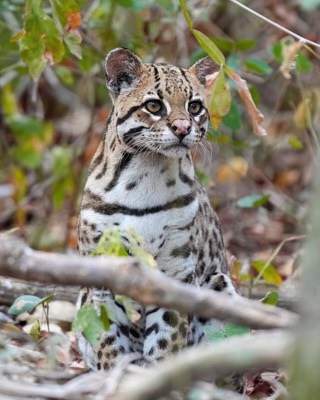
Ocelot (reference photo)
Photo: Giles Laurent / CC BY-SA 4.0 / Source / cropped

Species Data

Classification
Carnivora / Felidae Source
Size
Head-and-body length 55–100 cm, tail 30–45 cm, shoulder height 40–50 cm
Weight
Females 7–12 kg, males 8–18 kg
Lifespan
Captive: up to 20 years
Diet
Carnivore Mainly small mammals such as rodents, rabbits, armadillos and opossums, as well as birds, reptiles, fish, insects and crustaceans; needs 600–800 g of food a day
Activity
Mostly crepuscular and nocturnal; solitary
Distribution
Ranges from Texas and Arizona in the United States through Mexico and Central America to northern Argentina, and on the islands of Trinidad and Margarita, up to 3,000 m above sea level. Source

Did You Know?

  • Trade in ocelot skins peaked at 140,000 in 1970; bans followed, and in 1989 the species was added to CITES Appendix I. Source
  • The name comes from the Nahuatl word ōcēlōtl, which generally referred to the jaguar rather than the ocelot. Source
  • As of 2014 only 50–80 ocelots were thought to live in Texas, where inbreeding has reduced genetic diversity. Source

Where to See This Species

Operating facilities registered on this site: Japan 0 · Overseas 1

Saint Louis ZooOpened in 1904

No.1414In residence

Zuko

Zuko

OcelotLeopardus pardalis

Sex
Male
Born
Unknown
LC— Least Concern

Conservation Story

Conservation Status

Least Concern (LC)

Sources

en.wikipedia.org

Support Conservation

A visit is a small, positive way to support the daily lives of the animals you care about.

Visit
A visit itself helps support the facility.
Animal Supporter Programs & Giving
Find ways to support the facility through its official website.

FAQ

Where can I see Ocelot in Japan?
Operating facilities registered on this site: Japan 0 · Overseas 1. No facility is currently confirmed by resident animal records or official facility information. Source
What does an ocelot eat?
Mostly small mammals under 1 kg—rodents, rabbits, armadillos and opossums—as well as birds, reptiles, fish, insects and crustaceans. Source
Where do ocelots live?
From Texas and Arizona through Mexico and Central America to northern Argentina, in rainforest, thorn scrub, mangrove swamps and savanna. Source
Is the ocelot endangered?
It is listed as Least Concern because of its wide range, but habitat loss, hunting and traffic accidents are reducing many populations, and only about 50–80 remain in Texas. Source

Books & gear

Source: ja.wikipedia.org en.wikipedia.org