Pacific Sea Nettleヤナギクラゲ
Chrysaora fuscescensNE— Not Evaluated
The Pacific sea nettle is a striking golden-belled jellyfish native to the Pacific coast of North America, trailing maroon tentacles and frilly white oral arms that can extend several meters. A favorite in aquariums worldwide since the mid-20th century, it preys on zooplankton, small fish, and other jellies, and is one of the few animals that leatherback turtles hunt without being harmed by its sting.
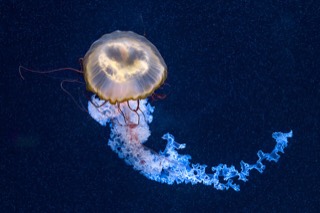 Pacific Sea Nettle (reference photo)

Species Data
- Classification
- Semaeostomeae / Pelagiidae Source
- Size
- Bell diameter can exceed 1 m in the wild, but most are under 50 cm; individuals kept in aquariums are typically around 30 cm
- Diet
- Carnivore Preys on a wide range of animals including zooplankton, crustaceans, small fish and their eggs, and other jellyfish
- Distribution
- Found along the Pacific coast of North America from southern British Columbia to Baja California Sur, with occasional sightings in the Gulf of Alaska and off Japan. Source
- Sources
- en.wikipedia.org kamo-kurage.jp
Did You Know?
- Leatherback sea turtles are immune to its sting and actively hunt it as prey. Source
- Small fish and crabs are sometimes found hitchhiking for shelter inside its bell. Source
- Thanks to its striking appearance and relatively easy care, it has been a popular aquarium exhibit species since around the mid-20th century. Source
Where to See This Species
Operating facilities registered on this site: Japan 1
KAMO AQUARIUMYamagataFrom JR Tsuruoka Station, take the Shonai Airport shuttle bus bound for Yunohama Onsen for about 40 minutes and get off at "Kamo Suizokukan"; the aquarium is right there (note that buses via Zenpoji do not stop here).
Conservation Story
Conservation Status
Not Evaluated (NE)
Sources
Support Conservation
A visit is a small, positive way to support the daily lives of the animals you care about.
- Visit
- A visit itself helps support the facility.
- Animal Supporter Programs & Giving
- Find ways to support the facility through its official website.
- Furusato Nozei
- Municipally run facilities may share official guidance for this Japanese hometown-tax program.
FAQ
- How big does the Pacific sea nettle get?
- Its bell can exceed 1 m in diameter in the wild, though most individuals are under 50 cm, with tentacles and oral arms trailing up to about 4.6 m. Source
- Is the Pacific sea nettle's sting dangerous?
- Its sting is often irritating and mildly painful to humans but is rarely dangerous. Source
- What does the Pacific sea nettle eat?
- It preys on zooplankton, crustaceans, small fish and their eggs and larvae, and other jellyfish; aquariums often feed it other jellyfish species. Source
- How many operating facilities are registered here?
- Operating facilities registered on this site: Japan 1 Source
Books & gear
Source: ja.wikipedia.org en.wikipedia.org