Reef Manta Rayナンヨウマンタ
Mobula alfrediVU— Vulnerable
The reef manta ray (Mobula alfredi) is one of the largest rays in the world, with a disc width typically 3-3.5 m and reaching up to 5.5 m, found across the tropical and subtropical Indo-Pacific from the Red Sea to Hawaii and French Polynesia. It filter-feeds on zooplankton by swimming in looping barrel rolls with its mouth open, matures around age 10, and may live to at least 50 years. Known for one of the highest brain-to-body mass ratios among fish, it shows complex social behavior, and is classified Vulnerable by the IUCN due to overfishing and its very low reproductive rate.
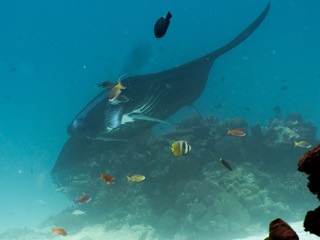 Reef Manta Ray (reference photo)
_-_49877611243.jpg)
Species Data
- Classification
- Myliobatiformes / Mobulidae Source
- Size
- Disc width up to about 5.5 m, typically about 3–3.5 m
- Lifespan
- Matures at around 10 years; lifespan is put at around 40 years, though some suggest it lives over 50
- Diet
- Filter feeder Filter feeder; swims with its mouth open, taking in plankton with seawater and filtering it out while performing somersault-like looping swims
- Distribution
- Found throughout the tropical and subtropical Indo-Pacific, with key populations at sites such as Hawaii, Fiji, Bali, Komodo, and the Maldives. Source
- Sources
- ja.wikipedia.org en.wikipedia.org
Did You Know?
- It has one of the highest brain-to-body mass ratios of any fish and shows complex social behavior, including apparent bonds between individuals that recognize one another. Source
- There are reported cases of manta rays entangled in fishing line approaching divers as if seeking help. Source
- In New Caledonia, individuals have been recorded diving as deep as 672 m in search of food. Source
Where to See This Species
Operating facilities registered on this site: Japan 3
Maxell Aqua Park ShinagawaTokyoAbout a 2-minute walk from the Takanawa exit of Shinagawa Station (Shinkansen, JR, and Keikyu lines).
Okinawa Churaumi AquariumOkinawaOpened in 2002
Osaka Aquarium KaiyukanOsakaOpened in 1990
Conservation Story
Conservation Status
Vulnerable (VU)
Sources
Support Conservation
A visit is a small, positive way to support the daily lives of the animals you care about.
- Visit
- A visit itself helps support the facility.
- Animal Supporter Programs & Giving
- Find ways to support the facility through its official website.
- Furusato Nozei
- Municipally run facilities may share official guidance for this Japanese hometown-tax program.
FAQ
- How does the reef manta ray feed?
- It filter-feeds, opening its mouth and swimming in looping, somersault-like rolls to strain zooplankton from the water. Source
- How big is a reef manta ray?
- Its disc typically spans 3-3.5 m across, with the largest individuals reaching about 5.5 m. Source
- Is the reef manta ray intelligent?
- Yes; it has one of the highest brain-to-body mass ratios of any fish and displays social behaviors, including apparent bonds between individuals that know each other. Source
- How many operating facilities are registered here?
- Operating facilities registered on this site: Japan 3 Source
Books & gear
Source: ja.wikipedia.org en.wikipedia.org