Spotted Garスポッテッドガー
Lepisosteus oculatusLC— Least Concern
The spotted gar is a slender, armor-scaled predatory fish native to North American rivers and lakes, easily recognized by its long snout covered in dark spots and its ability to gulp air at the surface when oxygen levels run low.
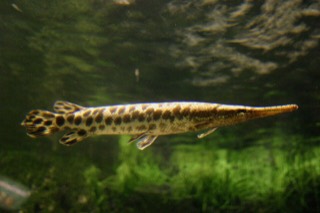 Spotted Gar (reference photo)

Species Data
- Classification
- Lepisosteiformes / Lepisosteidae Source
- Size
- Total length about 0.6–0.9 m
- Weight
- About 1.8–2.7 kg
- Lifespan
- Males live an average of about 8 years and females about 10, with a record of about 18 years
- Diet
- Carnivore Carnivorous, feeding mainly on fish and crustaceans such as shrimp, as well as aquatic invertebrates and insect larvae
- Distribution
- Found across North America from southern Ontario to the Gulf of Mexico coast and Texas, favoring clear, slow-moving, shallow waters of creeks, rivers, and lakes with aquatic vegetation. Source
- Sources
- en.wikipedia.org
Did You Know?
- Gars possess a primitive air-breathing organ: in response to low oxygen levels in slow-moving water, they can gulp air at the surface and pass it to a primitive lung-like gas bladder. Source
- Spotted gar eggs are highly toxic to potential predators, offering natural protection during the vulnerable incubation period. Source
Where to See This Species
Operating facilities registered on this site: Japan 1
Aquamarine FukushimaFukushimaOpened in 2000
Conservation Story
Conservation Status
Least Concern (LC)
Sources
Support Conservation
A visit is a small, positive way to support the daily lives of the animals you care about.
- Visit
- A visit itself helps support the facility.
- Animal Supporter Programs & Giving
- Find ways to support the facility through its official website.
- Furusato Nozei
- Municipally run facilities may share official guidance for this Japanese hometown-tax program.
FAQ
- How big does a spotted gar get?
- Adults typically reach 0.6-0.9 m in length and weigh 1.8-2.7 kg, with a maximum recorded lifespan of around 18 years. Source
- Can spotted gar breathe air?
- Yes. They have a primitive lung-like gas bladder and can gulp air at the surface, an adaptation that lets them survive in low-oxygen water. Source
- Are spotted gar eggs dangerous?
- Their eggs are highly toxic to potential predators, which helps protect them during incubation. Source
- How many operating facilities are registered here?
- Operating facilities registered on this site: Japan 1 Source
Books & gear
Source: ja.wikipedia.org en.wikipedia.org