Sugar Gliderフクロモモンガ
Petaurus brevicepsLC— Least Concern
The sugar glider is a small, nocturnal gliding marsupial native to the coastal forests of eastern Australia. It uses a membrane stretched between its limbs to glide more than 50 meters between trees, feeding on a seasonally shifting diet of pollen, insects, and tree sap. It is classified as Least Concern by the IUCN and is notable for the unusually active role males take in caring for young.
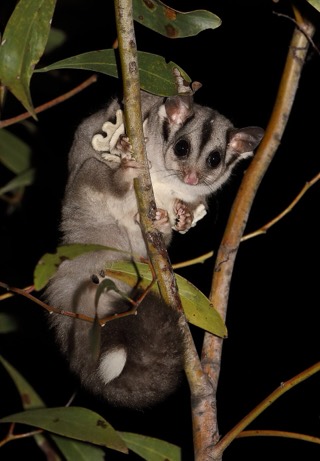 Sugar Glider (reference photo)
.jpg)
Species Data
- Classification
- Diprotodontia / Petauridae Source
- Size
- Total length about 24–30 cm
- Weight
- Males about 140 g / females about 115 g
- Lifespan
- Wild: up to about 9 years / captive: up to about 12 years (one report of 17.8 years)
- Diet
- Omnivore Omnivorous, feeding chiefly on pollen along with insects, sap, nectar, and lizards; the diet shifts with the season, centered on insects in summer and on sap and gum in winter
- Activity
- Nocturnal; forages while moving through the trees at night
- Distribution
- Following a 2021 taxonomic split, the sugar glider is now recognized as native to coastal forests of southeastern Queensland and most of New South Wales, Australia. Source
- Sources
- ja.wikipedia.org en.wikipedia.org
Did You Know?
- Using a gliding membrane stretched between its fore and hind limbs, it can glide more than 50 meters in a single leap. Source
- It is one of the few mammals in which males take an active role in raising offspring, since joeys cannot regulate their own body temperature until about 100 days old. Source
- When food is scarce, it can lower its metabolic rate and enter a torpor-like dormant state to conserve energy. Source
Where to See This Species
Operating facilities registered on this site: Japan 3 · Overseas 1
Gokatsuraike Animal ParkMieAbout 10 minutes from the Seiwa-Taki Interchange.
Saitamakenkodomodoubutsu Shizen KouenSaitamaOpened in 1980
San Diego ZooOpened in 1916
Conservation Story
Conservation Status
Least Concern (LC)
Sources
Support Conservation
A visit is a small, positive way to support the daily lives of the animals you care about.
- Visit
- A visit itself helps support the facility.
- Animal Supporter Programs & Giving
- Find ways to support the facility through its official website.
- Furusato Nozei
- Municipally run facilities may share official guidance for this Japanese hometown-tax program.
FAQ
- How far can sugar gliders glide?
- Using the membrane stretched between their front and hind legs, they can glide more than 50 meters between trees in a single leap. Source
- What do sugar gliders eat?
- They are omnivorous and shift their diet seasonally, relying more on insects in summer and on tree sap and gum in winter, along with pollen and nectar year-round. Source
- Do male sugar gliders help raise their young?
- Yes, males are unusually involved in parental care, which is important because joeys cannot regulate their own body temperature until around 100 days old. Source
- How many operating facilities are registered here?
- Operating facilities registered on this site: Japan 3 · Overseas 1 Source
Books & gear
Source: ja.wikipedia.org en.wikipedia.org