Tokyo Salamanderトウキョウサンショウウオ
Hynobius tokyoensisVU— Vulnerable
The Tokyo salamander is a small, nocturnal salamander endemic to the Kanto region of Japan, found in temperate forests, springs, and paddy fields across Tokyo, Saitama, Chiba, Kanagawa, Ibaraki, Tochigi, and part of Fukushima. It grows to about 8-13 cm long; its larvae feed on zooplankton while adults eat insects, spiders, and earthworms. Threatened by habitat loss, predation, and paddy-draining practices that can kill larvae before metamorphosis, it is listed as Vulnerable by the IUCN.
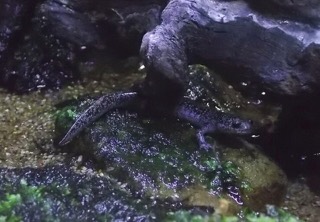 Tokyo Salamander (reference photo)
_-_GRB.JPG)
Species Data
- Classification
- Caudata / Hynobiidae Source
- Size
- Total length about 8–13 cm
- Lifespan
- Records report up to 21 years in the wild and over 30 years in captivity
- Diet
- Carnivore Larvae eat zooplankton such as water fleas; adults prey on soil animals such as spiders, insects, and earthworms
- Activity
- Nocturnal
- Distribution
- Endemic to Japan, found in parts of Ibaraki, Kanagawa, Saitama, Chiba, Tokyo, Tochigi, and Fukushima prefectures, inhabiting temperate forests, freshwater springs, and paddy fields. Source
- Sources
- ja.wikipedia.org en.wikipedia.org
Did You Know?
- Before it was formally described as a species, it was locally known in some areas as "Yamakaji," a name derived from its face resembling that of a kajika fish. Source
- In 2022, the northern population was recognized as a separate species, the Iwaki salamander. Source
- The population shows a skewed sex ratio of roughly 1.5 males to 1 female, and mid-summer paddy drainage can kill larvae before they complete metamorphosis, further lowering breeding success. Source
Where to See This Species
Operating facilities registered on this site: Japan 1
Conservation Story
Conservation Status
Vulnerable (VU)
Sources
Support Conservation
A visit is a small, positive way to support the daily lives of the animals you care about.
- Visit
- A visit itself helps support the facility.
- Animal Supporter Programs & Giving
- Find ways to support the facility through its official website.
- Furusato Nozei
- Municipally run facilities may share official guidance for this Japanese hometown-tax program.
FAQ
- Where is the Tokyo salamander found?
- It is endemic to Japan, found in parts of Tokyo, Saitama, Chiba, Kanagawa, Ibaraki, Tochigi, and Fukushima prefectures, in forests, springs, and paddy fields. Source
- Why is the Tokyo salamander endangered?
- It faces habitat loss and predation by introduced raccoons, and mid-summer paddy drainage can kill larvae before they complete metamorphosis. Source
- What does the Tokyo salamander eat?
- Larvae feed on zooplankton such as water fleas, while adults prey on spiders, insects, and earthworms. Source
- How many operating facilities are registered here?
- Operating facilities registered on this site: Japan 1 Source
Books & gear
Source: ja.wikipedia.org en.wikipedia.org