Upside-down Jellyfishサカサクラゲ
Cassiopea ornataNE— Not Evaluated
The upside-down jellyfish rests bell-down on shallow seafloors in warm coastal waters worldwide, including mangroves, mudflats, and turtle grass flats. It gets roughly 90% of its nutrition from photosynthetic zooxanthellae living in its tissue, supplementing this with plankton captured by its stinging cells. Despite lacking a brain, it has been shown to enter sleep-like states of quiescence; its conservation status has not been formally evaluated by the IUCN.
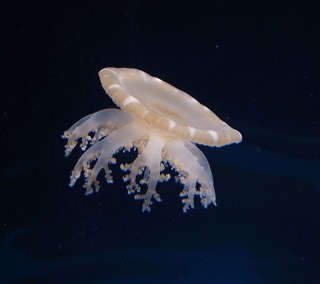 Upside-down Jellyfish (reference photo)

Species Data
- Classification
- Rhizostomeae / Cassiopeidae Source
- Size
- Has a flattened bell about 10–12 cm in diameter
- Diet
- Omnivore Captures small plankton with its stinging cells, but obtains most of its nutrition (about 90%) from the photosynthetic products of symbiotic zooxanthellae
- Distribution
- Found in warm shallow coastal waters worldwide, including mangrove swamps, mudflats, canals, and turtle grass flats. Source
- Sources
- ja.wikipedia.org en.wikipedia.org
Did You Know?
Where to See This Species
Operating facilities registered on this site: Japan 1
Osaka Aquarium KaiyukanOsakaOpened in 1990
Source links to official sites, official YouTube channels, and news aggregators such as Zoo Ring. Visit the publisher for the full item.
Conservation Story
Conservation Status
Not Evaluated (NE)
Sources
Support Conservation
A visit is a small, positive way to support the daily lives of the animals you care about.
- Visit
- A visit itself helps support the facility.
- Animal Supporter Programs & Giving
- Find ways to support the facility through its official website.
- Furusato Nozei
- Municipally run facilities may share official guidance for this Japanese hometown-tax program.
FAQ
- Why does it rest upside-down?
- It settles bell-down on the seafloor so the photosynthetic algae in its tissue stay exposed to sunlight from above. Source
- Can it sting people?
- Yes—its mucus and nematocysts can cause mild pain, rashes, and swelling, even without direct contact with its bell. Source
- How many operating facilities are registered here?
- Operating facilities registered on this site: Japan 1 Source
Books & gear
Source: ja.wikipedia.org en.wikipedia.org