Warthogイボイノシシ
Phacochoerus africanusLC— Least Concern
The common warthog is a wild pig species found across the savannas and grasslands of sub-Saharan Africa, easily recognized by the wart-like skin protrusions on its face and the large upward-curving tusks of adult males. It feeds mainly on grasses and roots, often kneeling on its front legs to graze, and lives in loose family groups. The IUCN lists it as Least Concern, and it remains widespread across much of its historical range.
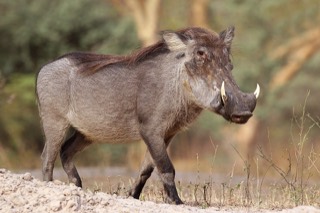 Warthog (reference photo)
.jpg)
Species Data
- Classification
- Artiodactyla / Suidae Source
- Diet
- Herbivore Feeds mainly on grasses, roots, and fruit; in the dry season it digs up rhizomes with its forelegs
- Activity
- Diurnal
- Distribution
- The common warthog is found across sub-Saharan Africa, inhabiting savanna, grassland, and open woodland. Source
- Sources
- ja.wikipedia.org en.wikipedia.org
Did You Know?
- The wart-like skin protrusions on either side of the face, especially pronounced in males, are the source of both its English and Japanese common names. Source
- Because of its short neck and long legs, it often kneels on its front legs to graze on short grass near the ground. Source
- Despite its prominent upward-curving tusks, it is generally docile and tends to flee rather than fight when threatened. Source
Where to See This Species
Operating facilities registered on this site: Japan 0
Verified individual animals and facilities will be added as official information becomes available.
Conservation Story
Conservation Status
Least Concern (LC)
Sources
Support Conservation
A visit is a small, positive way to support the daily lives of the animals you care about.
- Visit
- A visit itself helps support the facility.
- Animal Supporter Programs & Giving
- Find ways to support the facility through its official website.
FAQ
- Why does the warthog have bumps on its face?
- Those bumps are wart-like protrusions of skin, particularly developed in males, which give the species both its English and Japanese names. Source
- Why do warthogs kneel while eating?
- Their short necks and relatively long legs make it easier to reach short grass near the ground by kneeling on their front legs. Source
- Are warthogs dangerous?
- Although males have large tusks, warthogs are generally docile and prefer to flee from danger rather than fight. Source
- How many operating facilities are registered here?
- Operating facilities registered on this site: Japan 0 Source
Books & gear
Source: ja.wikipedia.org en.wikipedia.org