African Manateeアフリカマナティー
Trichechus senegalensisVU— Vulnerable
The African manatee is the only sirenian native to the Old World, ranging along the West African coast and adjoining rivers and lakes from Senegal to Angola. It grazes mainly on aquatic plants and mangroves but, unusually among manatees, also eats mollusks and fish in some coastal areas. Threatened by poaching, dam construction, and accidental entanglement in fishing nets, it is classified as Vulnerable by the IUCN.
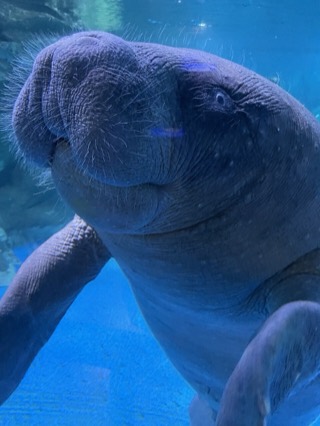 African Manatee (reference photo)

Species Data
- Classification
- Sirenia / Trichechidae Source
- Size
- Body length up to about 4.5 m
- Weight
- About 360 kg
- Lifespan
- Estimated at about 30 years
- Diet
- Omnivore Omnivorous, feeding mainly on more than 70 species of aquatic plants and on mangroves, consuming 4–9% of its body weight in wet plant matter daily; coastal populations also eat mollusks and fish
- Activity
- Nocturnal; rests in shallows 1–2 m deep during the day and becomes active from evening into the night
- Distribution
- The African manatee ranges along the West African coast from Senegal to Angola, moving freely between coastal waters, rivers, estuaries, lagoons, and inland lakes across more than 19 countries. Source
- Sources
- ja.wikipedia.org en.wikipedia.org
Did You Know?
- The African manatee is the only manatee species found in the Old World, and one of just two living sirenians there, alongside the dugong. Source
- Some researchers believe the West African water-spirit legend of 'Mami Wata' originated from sightings of manatees, particularly females surfacing to breathe. Source
- Sharks and crocodiles are considered natural predators, leaving African manatees exposed to threats even in the water. Source
Where to See This Species
Operating facilities registered on this site: Japan 1
Toba AquariumMieOpened in 1955
Conservation Story
Conservation Status
Vulnerable (VU)
Sources
Support Conservation
A visit is a small, positive way to support the daily lives of the animals you care about.
- Visit
- A visit itself helps support the facility.
- Animal Supporter Programs & Giving
- Find ways to support the facility through its official website.
- Furusato Nozei
- Municipally run facilities may share official guidance for this Japanese hometown-tax program.
FAQ
- Where do African manatees live?
- They live along the West African coast from Senegal to Angola, moving between the ocean, rivers, estuaries, lagoons, and inland lakes across more than 19 countries. Source
- What do African manatees eat?
- They are mostly herbivorous grazers, feeding on aquatic plants and mangrove vegetation, but coastal populations also eat mollusks and fish — an unusual trait among manatees. Source
- Why is the African manatee considered Vulnerable?
- Poaching for meat and oil, habitat fragmentation from dam construction, and accidental deaths in fishing nets and hydroelectric turbines have all contributed to its Vulnerable status on the IUCN Red List. Source
- How many operating facilities are registered here?
- Operating facilities registered on this site: Japan 1 Source
Books & gear
Source: ja.wikipedia.org en.wikipedia.org