Andean Condorアンデスコンドル
Vultur gryphusVU— Vulnerable
The Andean condor is one of the largest flying birds in the world, a New World vulture that soars over the Andes on wings spanning up to 3.3 meters. As a scavenger, it can travel vast distances at high altitude searching for carrion, and pairs are thought to mate for life over a lifespan that can exceed 70 years.
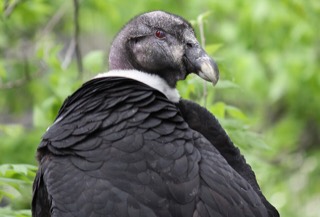 Andean Condor (reference photo)

Species Data
- Classification
- Accipitriformes / Cathartidae Source
- Size
- About 1.0–1.3 m
- Weight
- Average about 11.3 kg (males about 12.5 kg, females about 10.1 kg)
- Lifespan
- Said to live over 50 years, with a captive record of 79 years
- Diet
- Carnivore Scavenger feeding mainly on carrion, preferring the carcasses of large animals such as deer, cattle, and llamas; on the coast it also eats the carcasses of marine mammals
- Distribution
- Found along the South American Andes from Venezuela and Colombia south through Ecuador, Peru, Bolivia, Chile, and Argentina to Tierra del Fuego. Source
- Sources
- ja.wikipedia.org en.wikipedia.org
Did You Know?
- Its wingspan can reach up to 3.3 m, among the largest of any living flying bird, exceeded only by the great albatrosses and the two largest pelican species. Source
- It is a master of soaring flight; Charles Darwin once observed a condor that flapped its wings only once during roughly half an hour of observation. Source
Where to See This Species
Operating facilities registered on this site: Japan 6
Tokushima ZooTokushima
TOBU ZOOSaitamaFrom Tobu-Dobutsu-Koen Station (west exit), about 10 minutes on foot (600 m) or about 5 minutes by bus.
Iida Shiritsu DoubutsuenNaganoAddress: 33 Ogimachi, Iida, Nagano.
Hamamatsu Zoological GardensShizuokaOpened in 1950
Higashiyama Zoo and Botanical GardensAichiOpened in 1937
Conservation Story
Conservation Status
Vulnerable (VU)
Sources
Support Conservation
A visit is a small, positive way to support the daily lives of the animals you care about.
- Visit
- A visit itself helps support the facility.
- Animal Supporter Programs & Giving
- Find ways to support the facility through its official website.
- Furusato Nozei
- Municipally run facilities may share official guidance for this Japanese hometown-tax program.
FAQ
- Why is the Andean condor considered Vulnerable?
- The IUCN lists it as Vulnerable, with roughly 10,000 individuals remaining; the main threats are habitat loss and secondary poisoning from lead ammunition in the carcasses it scavenges. Source
- How long do Andean condors live?
- They are long-lived birds, typically living more than 50 years in the wild, with a verified captive record of 79 years. Source
- How many operating facilities are registered here?
- Operating facilities registered on this site: Japan 6 Source
Books & gear
Source: ja.wikipedia.org en.wikipedia.org