Australian Green Tree Frogイエアメガエル
Litoria caeruleaLC— Least Concern
The Australian green tree frog is a large, robust tree frog native to northern and eastern Australia and the lowlands of southern New Guinea. Nocturnal and highly adaptable, it hunts insects, spiders, smaller frogs, and even small mammals, and has become well known for turning up in unexpected human spaces such as toilet cisterns in search of moisture. Its scientific name, meaning "blue," is a historical misnomer stemming from early specimens that discolored in preservative, and the species remains a popular, long-lived amphibian in captivity, with some individuals living over 20 years.
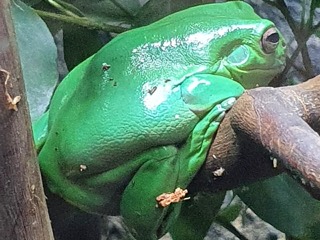 Australian Green Tree Frog (reference photo)

Species Data
- Classification
- Anura / Pelodryadidae Source
- Size
- Body length 7–12 cm
- Lifespan
- Average about 16 years in captivity, with a record of 23 years
- Diet
- Carnivore Preys mainly on arthropods such as insects and spiders, and also on earthworms, other amphibians, small reptiles, and small birds and mammals (including bats)
- Activity
- Nocturnal; hides in cool, damp shelter during the day and begins activity in the evening
- Distribution
- Native to northern and eastern Australia, ranging from the Kimberley region of Western Australia through the Northern Territory and Queensland to New South Wales, as well as the lowlands of southern New Guinea. Source
- Sources
- ja.wikipedia.org en.wikipedia.org
Did You Know?
- The male's mating call is remarkably loud and can sometimes be heard from several hundred meters away. Source
- Its adaptability to human environments is well documented—individuals are sometimes found seeking moisture inside toilet cisterns in houses. Source
- The species epithet caerulea means "blue," a misleading name that arose because early preserved specimens lost their yellow pigment layer to preservative damage, making them appear blue. Source
Where to See This Species
Operating facilities registered on this site: Japan 1
Conservation Story
Conservation Status
Least Concern (LC)
Sources
Support Conservation
A visit is a small, positive way to support the daily lives of the animals you care about.
- Visit
- A visit itself helps support the facility.
- Animal Supporter Programs & Giving
- Find ways to support the facility through its official website.
- Furusato Nozei
- Municipally run facilities may share official guidance for this Japanese hometown-tax program.
FAQ
- Why is the Australian green tree frog scientifically named for the color blue?
- The name is a historical accident: early preserved specimens lost their yellow pigment layer to chemical damage from preservatives, making them appear blue rather than their natural green color. Source
- How long do Australian green tree frogs live?
- In captivity they average around 16 years, and some well-cared-for individuals have been documented living more than 20 years, with one record reaching 23 years. Source
- Why do these frogs sometimes turn up in houses?
- They are highly adaptable to human environments and will seek out moisture wherever they can find it, occasionally being discovered inside toilet cisterns or other damp indoor spaces. Source
- How many operating facilities are registered here?
- Operating facilities registered on this site: Japan 1 Source
Books & gear
Source: ja.wikipedia.org en.wikipedia.org