Babirusaバビルサ
Babyrousa babyrussaVU— Vulnerable
The Buru babirusa is a small, forest-dwelling wild pig found only on Buru and the Sula Islands of Indonesia, distinguished by males' extraordinary curving tusks that pierce through the skin of the snout. Habitat loss from logging and hunting pressure have pushed the species into decline, and it is classified as Vulnerable by the IUCN. As of current records, no Japanese zoo or aquarium is confirmed to keep babirusa.
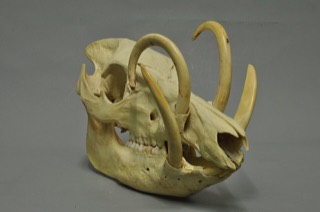 Babirusa (reference photo)

Species Data
- Classification
- Artiodactyla (Cetartiodactyla) / Suidae Source
- Size
- Considered the smallest species in the genus Babyrousa, but no specific body length figures could be confirmed
- Weight
- Newborns weigh about 380–1,050 g (no adult weight figures could be confirmed in the sources)
- Lifespan
- Reported at about 24 years
- Diet
- Omnivore Omnivorous, eating leaves, roots, and fruit as well as invertebrates and small vertebrates; its powerful jaws can crack nuts
- Activity
- Diurnal; males are solitary while females move in small groups with their young
- Distribution
- The Buru babirusa is native to the Indonesian island of Buru and to Mangole and Taliabu in the Sula Islands. It is now extinct on Sulabesi Island, also in the Sula Islands, where it once occurred. Source
Did You Know?
- Male babirusas grow upper canine tusks that pierce through the skin of the snout and curve upward, giving them four striking tusks in total. If not worn down naturally, the tusks can grow long enough to pierce the animal's own skull. Source
- Cave paintings of babirusas on Sulawesi have been dated to at least 35,400 years ago, making them among the oldest known examples of figurative art. Source
- Buru babirusa meat has an unusually low fat content of about 1.27%, compared with 5–15% for domestic pig meat. Source
Where to See This Species
Operating facilities registered on this site: Japan 0
Verified individual animals and facilities will be added as official information becomes available.
Conservation Story
Conservation Status
Vulnerable (VU)
Sources
Support Conservation
A visit is a small, positive way to support the daily lives of the animals you care about.
- Visit
- A visit itself helps support the facility.
- Animal Supporter Programs & Giving
- Find ways to support the facility through its official website.
FAQ
- Why do babirusas have such unusual tusks?
- In males, the upper canine teeth grow upward through the skin of the snout and curve back toward the forehead, while the lower canines also form tusks. Together these four tusks are used in combat between males, and if not worn down they can eventually pierce the animal's own skull. Source
- Where do Buru babirusas live?
- They are found only on the Indonesian island of Buru and on Mangole and Taliabu in the Sula Islands. Source
- Are babirusas endangered?
- Yes, all babirusa species are classified as Vulnerable or Endangered by the IUCN, mainly due to poaching and habitat loss from commercial logging. Source
- How many operating facilities are registered here?
- Operating facilities registered on this site: Japan 0 Source
Books & gear
Source: ja.wikipedia.org en.wikipedia.org