Brazilian Tapirブラジルバク
Tapirus terrestrisVU— Vulnerable
The South American tapir, also called the Brazilian or lowland tapir, is the largest native terrestrial mammal of the Amazon rainforest, recognizable by its short, prehensile snout. An excellent swimmer active mainly at night, it plays an outsized ecological role as a seed disperser across the forests it roams. Poaching and deforestation have driven population declines, and the IUCN classifies the species as Vulnerable.
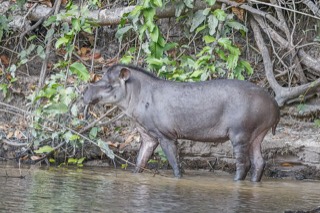 Brazilian Tapir (reference photo)
.JPG)
Species Data
- Classification
- Perissodactyla / Tapiridae Source
- Size
- Body length: males about 204 cm, females about 221 cm; shoulder height about 77–108 cm
- Weight
- About 150–320 kg (average about 225 kg)
- Lifespan
- Captive: about 25–35 years
- Diet
- Herbivore Herbivorous, eating grasses, leaves, twigs, bark, fruit, and aquatic plants
- Activity
- Nocturnal; rests in thickets during the day
- Distribution
- The South American tapir ranges across the Amazon basin east of the Andes, including Venezuela, Colombia, the Guianas, Brazil, Bolivia, Peru, Ecuador, Argentina, and Paraguay. Source
- Sources
- ja.wikipedia.org en.wikipedia.org
Did You Know?
- An excellent swimmer and diver, the South American tapir can stay submerged for more than five minutes, often escaping jaguars, pumas, and caimans by fleeing into water or dense brush. Source
- It is the largest surviving native terrestrial mammal in the Amazon and plays a crucial ecological role as a major seed disperser for rainforest plants. Source
- Though generally docile, a cornered tapir can defend itself powerfully, and documented incidents show it can inflict serious injuries with its bite. Source
Where to See This Species
Operating facilities registered on this site: Japan 4
Yokohama Shiritsu Kanazawa DoubutsuenKanagawaOpened in 1982
Kyoto City ZooKyotoOpened in 1903
Hirakawa ZooKagoshimaAbout a 20-minute walk from Goino Station on the JR Ibusuki-Makurazaki Line, or take a bus bound for Taniyama / Dobutsuen from Fukuhira Nokyo-mae to the last stop.
Higashiyama Zoo and Botanical GardensAichiOpened in 1937
Conservation Story
Conservation Status
Vulnerable (VU)
Sources
Support Conservation
A visit is a small, positive way to support the daily lives of the animals you care about.
- Visit
- A visit itself helps support the facility.
- Animal Supporter Programs & Giving
- Find ways to support the facility through its official website.
- Furusato Nozei
- Municipally run facilities may share official guidance for this Japanese hometown-tax program.
FAQ
- Why is the South American tapir important to its ecosystem?
- As the largest terrestrial mammal in the Amazon, it eats large quantities of fruit and disperses the seeds widely, making it a key seed disperser for many rainforest plant species. Source
- How does the South American tapir avoid predators?
- It is an excellent swimmer and diver, capable of staying underwater for more than five minutes, and often escapes jaguars, pumas, and caimans by fleeing into water or thick brush. Source
- Why is the South American tapir considered Vulnerable?
- Poaching for meat and hide, combined with habitat destruction from deforestation, have driven population declines across its range. Source
- How many operating facilities are registered here?
- Operating facilities registered on this site: Japan 4 Source
Books & gear
Source: ja.wikipedia.org en.wikipedia.org