Cane Toadオオヒキガエル
Rhinella marinaLC— Least Concern
The cane toad is a large, highly toxic toad native to Central and South America, infamous for becoming one of the world's most damaging invasive species after being deliberately introduced to Australia in 1935 as a failed biological pest-control measure. Its skin secretes potent bufotoxins that are lethal to many native predators lacking evolved resistance, driving declines in monitor lizards, snakes, crocodiles, and quolls across northern Australia. Now also established in Florida, Hawaii, the Philippines, and parts of Japan, it remains listed among the 100 worst invasive alien species worldwide.
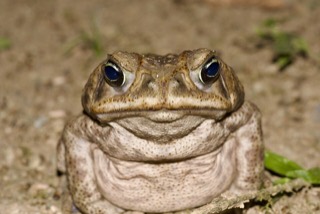 Cane Toad (reference photo)
.jpg)
Species Data
- Classification
- Anura / Bufonidae Source
- Size
- Body length: males 8.9–12.4 cm, females 8.8–15.5 cm; individuals up to 22 cm have been recorded in the native range
- Lifespan
- 10–15 years in the wild; one captive individual lived 35 years
- Diet
- Omnivore Voracious omnivore feeding mainly on insects, arthropods, and earthworms, as well as other frogs, small reptiles, small mammals, birds, and even pet food and garbage
- Activity
- Nocturnal; rests under rocks and fallen logs during the day
- Distribution
- Native to Central and South America from the Rio Grande Valley to the central Amazon; introduced as a failed pest-control measure to Australia, Hawaii, Florida, the Philippines, and elsewhere, where it is now a major invasive species. Source
- Sources
- ja.wikipedia.org en.wikipedia.org
Did You Know?
- In August 1935, 102 toads were brought from Hawaii to Australia to control cane beetles, but the beetles lived atop plants beyond the toads' reach, and the failed control effort had already produced 62,000 toadlets by March 1937. Source
- Its skin and parotoid glands secrete potent bufotoxins; contact with the eyes can cause blindness, and ingesting enough toxin can trigger fatal cardiac arrest. Even its eggs and tadpoles remain toxic. Source
- In Australia, native predators such as monitor lizards, snakes, and crocodiles have no natural resistance and often die after eating cane toads, a pattern linked to local extinctions of northern quolls in Kakadu National Park; the species is listed among the world's 100 worst invasive alien species. Source
Where to See This Species
Operating facilities registered on this site: Japan 1
Higashiyama Zoo and Botanical GardensAichiOpened in 1937
Conservation Story
Conservation Status
Least Concern (LC)
Sources
Support Conservation
A visit is a small, positive way to support the daily lives of the animals you care about.
- Visit
- A visit itself helps support the facility.
- Animal Supporter Programs & Giving
- Find ways to support the facility through its official website.
- Furusato Nozei
- Municipally run facilities may share official guidance for this Japanese hometown-tax program.
FAQ
- Why was the cane toad introduced to Australia?
- In 1935, 102 toads were imported from Hawaii to control cane beetles damaging sugarcane crops, but the beetles lived atop plants out of the toads' reach, so the plan failed while the toad population exploded uncontrollably. Source
- How dangerous is cane toad toxin?
- Its skin and parotoid glands secrete bufotoxins that can blind on contact with the eyes and cause fatal cardiac arrest if enough is ingested; even its eggs and tadpoles remain toxic to predators. Source
- What ecological damage has the cane toad caused?
- Native Australian predators such as monitor lizards, snakes, and crocodiles have no resistance to its toxin and often die after eating one, a pattern connected to sharp local declines in species like the northern quoll. Source
- How many operating facilities are registered here?
- Operating facilities registered on this site: Japan 1 Source
Books & gear
Source: ja.wikipedia.org en.wikipedia.org