Coelacanthシーラカンス
Latimeria chalumnaeCR— Critically Endangered
The West Indian Ocean coelacanth is an ancient, deep-water fish long thought extinct until a living specimen was caught off South Africa in 1938, earning it fame as a "living fossil." Found in underwater caves off East Africa and the Comoros at depths of 70 to 140 meters, it grows and reproduces extremely slowly, with a lifespan now estimated at around 100 years, and remains one of the world's most endangered fish.
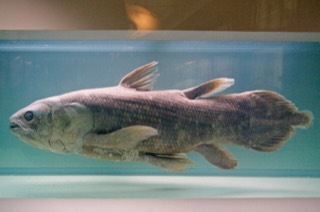 Coelacanth (reference photo)

Species Data
- Classification
- Coelacanthiformes / Latimeriidae Source
- Size
- Up to about 1.68 m in males and about 2 m in females
- Weight
- Average about 45 kg, maximum about 95 kg
- Lifespan
- Analysis of growth rings in the scales suggests a gestation period of at least 5 years and a lifespan of about 100 years
- Diet
- Piscivore Opportunistic predator that preys on fish and squid in the shelter of deep-sea rocks, sometimes assuming a headstand-like posture to take prey
- Distribution
- Found in the western Indian Ocean from South Africa's northeast coast north to Tanzania, Kenya, the Comoros, and Madagascar, inhabiting underwater caves at depths of roughly 70 to 140 meters. Source
- Sources
- ja.wikipedia.org en.wikipedia.org
Did You Know?
- Long believed extinct since the end of the Cretaceous, a living individual was caught off South Africa in 1938, instantly making it world-famous as a "living fossil". Source
- Analysis of growth rings in its scales suggests a gestation period of at least five years and a lifespan of around 100 years, revealing an unusually slow life history among vertebrates. Source
- The population is estimated to have declined by about 30% between 1991 and 1994, with fewer than 500 individuals believed to remain as of 1998, placing the species at severe risk of extinction. Source
Where to See This Species
Operating facilities registered on this site: Japan 2
Aquamarine FukushimaFukushimaOpened in 2000
Toba AquariumMieOpened in 1955
Former facilities
Shima MarinelandMieOpened in 1970
Closed: 2021-03-31 Official Site
Source links to official sites, official YouTube channels, and news aggregators such as Zoo Ring. Visit the publisher for the full item.
Conservation Story
Conservation Status
Critically Endangered (CR)
Sources
Support Conservation
A visit is a small, positive way to support the daily lives of the animals you care about.
- Visit
- A visit itself helps support the facility.
- Animal Supporter Programs & Giving
- Find ways to support the facility through its official website.
- Furusato Nozei
- Municipally run facilities may share official guidance for this Japanese hometown-tax program.
FAQ
- Why is the coelacanth called a living fossil?
- It was known only from fossils and believed extinct since the end of the Cretaceous period until a living specimen was caught off South Africa in 1938, revealing that the ancient lineage had survived essentially unnoticed. Source
- How long does a coelacanth live?
- Analysis of growth rings in its scales suggests a lifespan of around 100 years, with a gestation period of at least five years, making it one of the slowest-reproducing vertebrates known. Source
- How many operating facilities are registered here?
- Operating facilities registered on this site: Japan 2 Source
Books & gear
Source: ja.wikipedia.org en.wikipedia.org