Akoya Pearl Oysterアコヤガイ
Pinctada fucataLC— Least Concern
The Akoya pearl oyster is the small bivalve at the heart of Japan's cultured pearl industry, prized for coating any implanted nucleus in lustrous nacre — and notable among mollusks for being the first to have its full genome sequenced, in 2012.
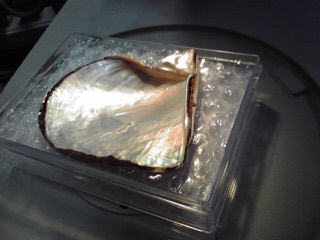 Akoya Pearl Oyster (reference photo)

Species Data
- Classification
- Pterioida / Pteriidae Source
- Size
- Shell length about 5 centimeters
- Diet
- Filter feeder Filter feeds on plankton and suspended organic matter
- Distribution
- Widely distributed across tropical to subtropical waters of the Pacific and Indian Oceans; in Japan found south of the Bōsō Peninsula, attaching itself with byssal threads to rocky reefs from the low-tide line to about 3 m depth. Source
- Sources
- ja.wikipedia.org
Did You Know?
- Its ability to coat any foreign object introduced into its shell with nacre is exploited for pearl farming, notably in Japan's Uwa Sea (Ehime), Ōmura Bay (Nagasaki), and Ago Bay (Mie). Source
- It is a hermaphrodite capable of changing sex, and in 2012 it became the first mollusk to have its complete genome sequenced. Source
Where to See This Species
Operating facilities registered on this site: Japan 0
Verified individual animals and facilities will be added as official information becomes available.
Conservation Story
Conservation Status
Least Concern (LC)
Sources
Support Conservation
A visit is a small, positive way to support the daily lives of the animals you care about.
- Visit
- A visit itself helps support the facility.
- Animal Supporter Programs & Giving
- Find ways to support the facility through its official website.
FAQ
- Why is the Akoya pearl oyster important to the pearl industry?
- When a foreign object is introduced into its shell, it coats the object with layers of nacre, forming a pearl — a property exploited in Japan's cultured pearl farms in areas like Ago Bay and the Uwa Sea. Source
- How does the Akoya pearl oyster feed?
- It is a filter feeder, drawing in seawater and straining out plankton and organic particles for food. Source
- What was scientifically significant about the Akoya pearl oyster in 2012?
- It became the first mollusk species to have its complete genome sequenced. Source
- How many operating facilities are registered here?
- Operating facilities registered on this site: Japan 0 Source
Books & gear
Source: ja.wikipedia.org en.wikipedia.org