Domestic Chickenニワトリ
Gallus gallus domesticusNE— Not Evaluated
The domestic chicken is the world's most numerous bird, descended from the red junglefowl of Southeast Asia and domesticated roughly 8,000 years ago. With a global population exceeding 26 billion, it is raised worldwide for eggs and meat and remains one of humanity's most economically important animals.
Operating facilities registered on this site: Japan 1 (Hitachi Kamine Zoo). These facilities are confirmed by resident animal records or the facility’s official information.
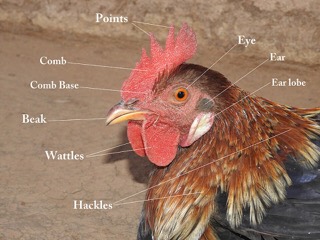 Domestic Chicken (reference photo)

Species Data
- Classification
- Galliformes / Phasianidae Source
- Size
- Varies greatly by breed
- Weight
- Varies greatly by breed (newly hatched chicks weigh about 37 g)
- Lifespan
- Typically 5–10 years, record 16 years
- Diet
- Omnivore Omnivorous; scratches the ground for seeds and insects and also eats small animals such as lizards and mice
- Distribution
- Descended from the red junglefowl of Southeast Asia, domesticated roughly 8,000 years ago; now raised worldwide. Source
- Sources
- ja.wikipedia.org en.wikipedia.org
Did You Know?
- Its wild ancestor, the red junglefowl, lays only a few dozen eggs per year, but selective breeding has allowed modern egg-laying breeds to produce around 320 eggs annually—with one authenticated record of 371 eggs in 364 days. Source
- Chickens can perceive UV-A light down to about 350 nm, giving them a visual range beyond human sight, which is why lighting conditions matter greatly for their welfare. Source
Where to See This Species
Operating facilities registered on this site: Japan 1
Hitachi Kamine ZooIbarakiAbout 5 minutes from the Hitachi-Chuo Interchange on the Joban Expressway via National Route 6.
Possible records, not yet confirmed: 4
These facilities are not confirmed by an official animal list. They appear in secondary sources such as Wikipedia; check the facility’s official website for current exhibits.
Ichikawa Zoological & Botanical GardenChibaAddress: 284-1 Omachi, Ichikawa, Chiba.
(Not confirmed by official sources) Source
Himeji City ZooHyogoOpened in 1951
(Not confirmed by official sources) Source
Toyama Municipal Family Park ZooToyamaOpened in 1984
(Not confirmed by official sources) Source
Source links to official sites, official YouTube channels, and news aggregators such as Zoo Ring. Visit the publisher for the full item.
Conservation Story
Conservation Status
Not Evaluated (NE)
Sources
Support Conservation
A visit is a small, positive way to support the daily lives of the animals you care about.
- Visit
- A visit itself helps support the facility.
- Animal Supporter Programs & Giving
- Find ways to support the facility through its official website.
- Furusato Nozei
- Municipally run facilities may share official guidance for this Japanese hometown-tax program.
FAQ
- Where can I see Domestic Chicken in Japan?
- Operating facilities registered on this site: Japan 1 (Hitachi Kamine Zoo). These facilities are confirmed by resident animal records or the facility’s official information. Source
- What is the wild ancestor of the domestic chicken?
- It descends from the red junglefowl (Gallus gallus) of Southeast Asia, domesticated approximately 8,000 years ago. Source
- How many chickens are there in the world?
- The global chicken population exceeded 26.5 billion as of 2023, making it by far the most numerous bird on Earth. Source
Books & gear
Source: ja.wikipedia.org en.wikipedia.org