Dyeing Poison Frogアイゾメヤドクガエル
Dendrobates tinctoriusLC— Least Concern
The dyeing poison frog is one of the largest species in the poison dart frog family, native to primary rainforest of the eastern Guiana Shield in South America. Its bold black-and-yellow or blue patterning warns predators of skin toxins that, notably, are not self-produced but sequestered from a diet rich in alkaloid-containing ants and mites—meaning captive-bred frogs raised on standard feeder insects lose their toxicity entirely. Parents carry newly hatched tadpoles on their backs to water, and the species' name references an indigenous tradition of using its toxin to alter the color of parrot feathers.
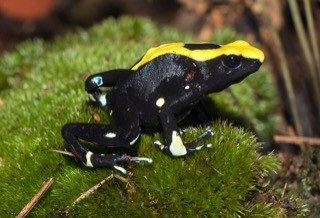 Dyeing Poison Frog (reference photo)

Species Data
- Classification
- Anura / Dendrobatidae Source
- Size
- Body length up to 5 cm, among the largest in the genus Dendrobates; may reach 6 cm in captivity
- Diet
- Insectivore Carnivorous, preying mainly on ants and also on small arthropods such as mites; the alkaloid toxins stored in its skin are derived from this diet
- Activity
- Strongly terrestrial, spending most of its time on the ground where prey is easy to catch, though it sometimes climbs trees
- Distribution
- Found across the eastern Guiana Shield in French Guiana, Guyana, Suriname, and northern Brazil, inhabiting primary tropical rainforest. Source
- Sources
- ja.wikipedia.org en.wikipedia.org
Did You Know?
- Its species name tinctorius means "for dyeing," referencing an indigenous tradition of using the frog's toxin to change the color of green parrot feathers. Source
- The toxin is not self-produced but sequestered from a diet of alkaloid-containing ants and mites, which is why captive-bred individuals raised on standard feeder insects lose their toxicity entirely. Source
- Females lay clutches of 8 to 10 eggs under leaf litter, and once hatched, a parent carries the tadpoles on its back to a suitable water source. Source
Where to See This Species
Operating facilities registered on this site: Japan 1
Higashiyama Zoo and Botanical GardensAichiOpened in 1937
Conservation Story
Conservation Status
Least Concern (LC)
Sources
Support Conservation
A visit is a small, positive way to support the daily lives of the animals you care about.
- Visit
- A visit itself helps support the facility.
- Animal Supporter Programs & Giving
- Find ways to support the facility through its official website.
- Furusato Nozei
- Municipally run facilities may share official guidance for this Japanese hometown-tax program.
FAQ
- Is the dyeing poison frog dangerous to touch?
- Wild individuals carry toxic alkaloids in their skin that can cause numbness and other symptoms on contact, but captive-bred frogs raised on standard feeder insects lose this toxicity because the toxin comes entirely from their wild diet rather than being self-produced. Source
- Why is it called the "dyeing" poison frog?
- Its species name tinctorius means "for dyeing," reflecting an indigenous tradition of using its skin toxin to alter the color of green parrot feathers. Source
- Do dyeing poison frogs care for their young?
- Yes. After eggs laid under leaf litter hatch, a parent carries the tadpoles on its back to a nearby water source where they can continue developing. Source
- How many operating facilities are registered here?
- Operating facilities registered on this site: Japan 1 Source
Books & gear
Source: ja.wikipedia.org en.wikipedia.org