Eurasian Lynxオオヤマネコ
Lynx lynxLC— Least Concern
The Eurasian lynx is the largest of the four lynx species, ranging across the forests of Northern and Central Europe through Central Asia, Siberia, and the Himalayas. A nocturnal ambush predator, it preys mainly on roe deer and other small to medium ungulates, though it also takes hares, birds, and rodents. Once extirpated from much of Western Europe, it has been successfully reintroduced in countries including Germany, France, and Italy, and the IUCN classifies the species as Least Concern.
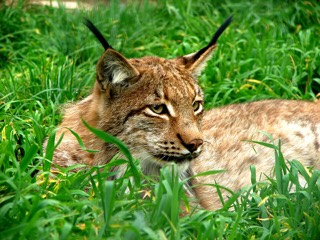 Eurasian Lynx (reference photo)

Species Data
- Classification
- Carnivora / Felidae Source
- Size
- Body length (excluding tail): males about 76–106 cm, females about 73–99 cm; tail about 11–25 cm
- Weight
- Males about 11.7–29 kg, females about 13–21 kg (up to 32 kg has been reported in Russian populations, while those west of Fennoscandia are smaller)
- Lifespan
- Wild: average about 5 years, though high juvenile mortality makes this highly variable; one individual lived 17 years. The record in captivity is 24 years
- Diet
- Carnivore Carnivorous, feeding mainly on small to medium ungulates such as red deer, sika deer, and Siberian roe deer and on the young of large ungulates; also preys on hares, birds, rodents, amphibians, and fish. Tends to take smaller prey from spring to fall and larger prey in winter
- Activity
- Mainly nocturnal; rests hidden in dense thickets during the day
- Distribution
- The Eurasian lynx is widely distributed across Northern, Central, and Eastern Europe through Central Asia, Siberia, the Tibetan Plateau, and the Himalayas, inhabiting temperate and boreal forests up to 5,500 m elevation. Source
Did You Know?
- The Eurasian lynx is the largest of the four living lynx species, and it is so elusive that its presence in some regions has remained undetected for years at a time. Source
- In Estonia, a single adult lynx is estimated to kill around 60 roe deer per year. Source
- The Eurasian lynx once inhabited Japan as well, with fossil evidence documenting its presence there from the Paleolithic (around 12,000 years ago) through the Jomon period (around 2,500 years ago). Source
Where to See This Species
Operating facilities registered on this site: Japan 4
Kyoto City ZooKyotoOpened in 1903
Utsunomiya DoubutsuenTochigiAbout 5 minutes from the Utsunomiya IC on the Tohoku Expressway; free parking for 1,000 cars.
Hamura ZooTokyoAbout a 20-minute walk from the East Exit of Hamura Station on the JR Ome Line.
- オオヤマネコ ハロとキキ20260917e
- オオヤマネコ20260825
- オオヤマネコ予防接種後の子どもたち20260721e
- オオヤマネコ子どもたち夜間開園20260726e
- オオヤマネコ20260703
- オオヤマネコ授乳20260623
Source links to official sites, official YouTube channels, and news aggregators such as Zoo Ring. Visit the publisher for the full item.
Conservation Story
Conservation Status
Least Concern (LC)
Sources
Support Conservation
A visit is a small, positive way to support the daily lives of the animals you care about.
- Visit
- A visit itself helps support the facility.
- Animal Supporter Programs & Giving
- Find ways to support the facility through its official website.
- Furusato Nozei
- Municipally run facilities may share official guidance for this Japanese hometown-tax program.
FAQ
- What do Eurasian lynx eat?
- They prey mainly on roe deer and other small to medium-sized ungulates, along with hares, birds, and rodents, requiring roughly 1.1 to 2 kg of meat per day. Source
- Did lynx ever live in Japan?
- Yes. Fossil evidence shows the Eurasian lynx inhabited Japan from the Paleolithic period, roughly 12,000 years ago, through the Jomon period about 2,500 years ago, though it no longer occurs there today. Source
- Is the Eurasian lynx endangered?
- No, it is classified as Least Concern by the IUCN, and reintroduction programs in countries such as Germany, France, and Italy have helped restore populations in parts of Western Europe where it had disappeared. Source
- How many operating facilities are registered here?
- Operating facilities registered on this site: Japan 4 Source
Books & gear
Source: ja.wikipedia.org en.wikipedia.org