Firefly Squidホタルイカ
Watasenia scintillansLC— Least Concern
The firefly squid is a small, short-lived squid famous for its blue-green bioluminescence, produced by three distinct types of light organs — a combination unique among cephalopods — and for the spectacular springtime swarms that light up Japan's Toyama Bay.
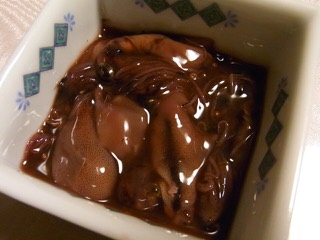 Firefly Squid (reference photo)

Species Data
- Classification
- Oegopsida / Enoploteuthidae Source
- Size
- Mantle length about 4 cm in males and about 6 cm in females
- Weight
- About 10 g
- Lifespan
- Lifespan about 1 year; dies after spawning
- Diet
- Carnivore Young individuals feed mainly on copepods; as subadults and adults the diet broadens to include planktonic crustaceans, small fish, and squid
- Distribution
- Found in waters around Japan, throughout the Sea of Japan and part of the Pacific side, with major landings in Toyama Bay and the Sea of Japan coast of Hyōgo Prefecture. Source
- Sources
- ja.wikipedia.org en.wikipedia.org
Did You Know?
- In spring, hundreds of thousands of firefly squid swarm close to shore in Toyama Bay — a phenomenon considered unique in the world. Source
- It is the only known cephalopod with three distinct types of photophores, producing both blue and green bioluminescence through a coelenterazine-based compound whose reaction depends heavily on ATP and magnesium. Source
Where to See This Species
Operating facilities registered on this site: Japan 2
UOZU AQUARIUMToyamaOpened in 1913
HOTARUIKA MUSEUMToyama
Conservation Story
Conservation Status
Least Concern (LC)
Sources
Support Conservation
A visit is a small, positive way to support the daily lives of the animals you care about.
- Visit
- A visit itself helps support the facility.
- Animal Supporter Programs & Giving
- Find ways to support the facility through its official website.
- Furusato Nozei
- Municipally run facilities may share official guidance for this Japanese hometown-tax program.
FAQ
- Why does the firefly squid glow?
- It has three types of photophores (light organs) that produce blue and green bioluminescence through a coelenterazine-based reaction involving ATP and magnesium — a combination unique among cephalopods. Source
- Where can you see firefly squid swarms?
- Toyama Bay in Japan is famous for spring events where hundreds of thousands of firefly squid swarm close to shore, a phenomenon not documented anywhere else in the world. Source
- How long do firefly squid live?
- Their lifespan is about one year; they die shortly after reproducing. Source
- How many operating facilities are registered here?
- Operating facilities registered on this site: Japan 2 Source
Books & gear
Source: ja.wikipedia.org en.wikipedia.org