Gharialガビアル
Gavialis gangeticusCR— Critically Endangered
The gharial is a critically endangered crocodilian distinguished by its extremely long, narrow snout, adapted for catching fish among more than 100 sharp, interlocking teeth. Once common across the major rivers of the Indian subcontinent, its range has contracted to about 2% of its historical extent, with an estimated maximum of 900 individuals surviving in fragmented populations in India and Nepal. Mature males grow a distinctive bulbous nasal protrusion called a "ghara," used in courtship displays.
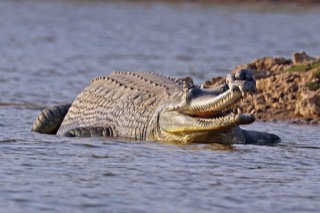 Gharial (reference photo)
_male.jpg)
Species Data
- Classification
- Crocodilia / Gavialidae Source
- Size
- Females 2.6–4.5 m in total length, males 3–6 m
- Weight
- Large males average about 160 kg, with a maximum of over 600 kg and a record of 977 kg
- Diet
- Piscivore Piscivorous, catching fish with its long, slender snout and numerous sharp interlocking teeth; juveniles also eat insects, tadpoles, and frogs
- Distribution
- Once widespread across major river systems of the Indian subcontinent including the Indus, Ganges, and Brahmaputra, its range has shrunk to about 2% of its historical extent, with fragmented populations surviving in parts of India and Nepal—an estimated maximum of 900 individuals as of 2019. Source
- Sources
- ja.wikipedia.org en.wikipedia.org
Did You Know?
Where to See This Species
Operating facilities registered on this site: Japan 1
Yokohama Shiritsu Nogeyama DoubutsuenKanagawaOpened in 1951
Conservation Story
Conservation Status
Critically Endangered (CR)
Sources
Support Conservation
A visit is a small, positive way to support the daily lives of the animals you care about.
- Visit
- A visit itself helps support the facility.
- Animal Supporter Programs & Giving
- Find ways to support the facility through its official website.
- Furusato Nozei
- Municipally run facilities may share official guidance for this Japanese hometown-tax program.
FAQ
- What is the 'ghara' on a male gharial's snout?
- It is a hollow, bulbous growth at the tip of the snout that develops in mature males, thought to amplify vocalizations during courtship. Source
- Why is the gharial critically endangered?
- Habitat loss, entanglement in fishing nets, and heavy metal pollution have reduced its range to about 2% of its historical extent, leaving an estimated maximum of 900 individuals in the wild. Source
- How many operating facilities are registered here?
- Operating facilities registered on this site: Japan 1 Source
Books & gear
Source: ja.wikipedia.org en.wikipedia.org