Giant Pacific Octopusミズダコ
Enteroctopus dofleiniLC— Least Concern
The giant Pacific octopus is the largest octopus species in the world, ranging across the North Pacific from Japan to California. Renowned for its intelligence and problem-solving skills, it preys on crabs, shellfish, and fish, and females devote a final six months of life to guarding their eggs without eating.
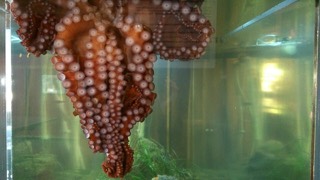 Giant Pacific Octopus (reference photo)

Species Data
- Classification
- Octopoda / Enteroctopodidae Source
- Size
- Usually 3–5 m in body length; the record is 9.1 m
- Weight
- Usually 10–50 kg; the record is 272 kg
- Lifespan
- About 3–5 years in the wild (about 4 years in some regions)
- Diet
- Carnivore Preys on a wide range of animals including crustaceans such as large crabs and red king crabs, fish, mollusks such as scallops, and sea urchins
- Distribution
- Found across the North Pacific, from Baja California through Alaska, the Aleutians, Russia's Far East, and down to Japan and Korea, occurring from the intertidal zone to depths of about 2,000 m. Source
- Sources
- ja.wikipedia.org en.wikipedia.org
Did You Know?
- The largest recorded specimen measured about 9.1 m across and weighed 272 kg, making it the largest octopus species known. Source
- It is considered highly intelligent, capable of solving mazes and puzzles like unscrewing jar lids, and it can recognize individual human keepers. Source
- Females guard their eggs for roughly six months without feeding, and typically die shortly after the eggs hatch. Source
Where to See This Species
Operating facilities registered on this site: Japan 3
Echizen Matsushima AquariumFukuiOpened in 1959
Osaka Aquarium KaiyukanOsakaOpened in 1990
Kyoto AquariumKyotoAbout a 15-minute walk from the central exit of JR Kyoto Station.
Former facilities
Closed: 2018-01-31 Official Site
Source links to official sites, official YouTube channels, and news aggregators such as Zoo Ring. Visit the publisher for the full item.
Conservation Story
Conservation Status
Least Concern (LC)
Sources
Support Conservation
A visit is a small, positive way to support the daily lives of the animals you care about.
- Visit
- A visit itself helps support the facility.
- Animal Supporter Programs & Giving
- Find ways to support the facility through its official website.
- Furusato Nozei
- Municipally run facilities may share official guidance for this Japanese hometown-tax program.
FAQ
- How big does a giant Pacific octopus get?
- Adults commonly reach 3-5 m across and weigh 10-50 kg, with the largest confirmed specimen measuring about 9.1 m and weighing 272 kg. Source
- How intelligent is the giant Pacific octopus?
- It is regarded as one of the most intelligent invertebrates, able to solve mazes and puzzles, use tools, and recognize individual human caretakers. Source
- What happens to females after they lay eggs?
- Females stop eating and guard their eggs continuously for about six months until they hatch, then die shortly afterward. Source
- How many operating facilities are registered here?
- Operating facilities registered on this site: Japan 3 Source
Books & gear
Source: ja.wikipedia.org en.wikipedia.org