Giant Water Bugタガメ
Lethocerus deyrolleiNE— Not Evaluated
The giant water bug is a large aquatic predator found in shallow, vegetated ponds and rice paddies from Japan through East and Southeast Asia. It ambushes fish, frogs, and other small animals with its powerful raptorial forelegs, and males are unusual among insects for caring solo for the eggs until they hatch.
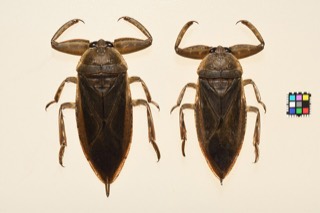 Giant Water Bug (reference photo)

Species Data
- Classification
- Hemiptera / Belostomatidae Source
- Size
- Body length 48–65 mm; females are larger, some exceeding 60 mm, while males are usually under 55 mm
- Lifespan
- Usually 1 year in the wild; individuals living 2–3 years in captivity are not unusual
- Diet
- Carnivore Seizes prey with its sickle-shaped forelegs, pierces it with its rostrum, injects digestive fluid, and sucks up the liquefied flesh through external digestion; preys on a wide range of aquatic animals including loaches, crucian carp, frogs, small fish, and dragonfly nymphs
- Activity
- Nocturnal and strongly attracted to light; sometimes flies to artificial lighting
- Distribution
- Distributed across Japan, Taiwan, Korea, China, Indochina, and the Russian Far East, favoring shallow, vegetated still waters such as rice paddies and irrigation ditches; populations have declined sharply and the species is considered threatened in Japan and Korea. Source
- Sources
- ja.wikipedia.org en.wikipedia.org
Did You Know?
- Males climb to the egg mass and drip water onto it regularly until hatching; solitary paternal care like this is known in fewer than ten insect species worldwide. Source
- Females sometimes destroy egg masses being tended by another male to create a mating opportunity for themselves, an infanticide strategy documented only in giant water bugs among insects. Source
- Strongly attracted to artificial light, individuals often land near stadium floodlights or streetlamps and dry out to death away from water, a factor contributing to population declines. Source
Where to See This Species
Operating facilities registered on this site: Japan 2
Aquamarine FukushimaFukushimaOpened in 2000
HIMEJI CITY AQUARIUMHyogoA 10-minute walk from Tegara Station on the Sanyo Electric Railway, or a 15-minute walk from JR Tegarayama-Heiwakoen Station.
Source links to official sites, official YouTube channels, and news aggregators such as Zoo Ring. Visit the publisher for the full item.
Conservation Story
Conservation Status
Not Evaluated (NE)
Sources
Support Conservation
A visit is a small, positive way to support the daily lives of the animals you care about.
- Visit
- A visit itself helps support the facility.
- Animal Supporter Programs & Giving
- Find ways to support the facility through its official website.
- Furusato Nozei
- Municipally run facilities may share official guidance for this Japanese hometown-tax program.
FAQ
- How does the giant water bug catch its prey?
- It seizes fish, frogs, and other small aquatic animals with its stout, sickle-shaped forelegs, then injects digestive enzymes through its beak and sucks up the liquefied tissue. Source
- Do giant water bugs care for their young?
- Yes, males guard the egg mass and periodically drip water onto it to keep the eggs from drying out until they hatch, a rare example of solo paternal care among insects. Source
- Why are giant water bugs declining in Japan?
- Habitat loss in paddies and ponds is a major factor, and their strong attraction to artificial light also causes many individuals to land near streetlights or stadium floodlights and die of dehydration away from water. Source
- How many operating facilities are registered here?
- Operating facilities registered on this site: Japan 2 Source
Books & gear
Source: ja.wikipedia.org en.wikipedia.org