Greater Rheaレア
Rhea americanaNT— Near Threatened
The greater rhea is the largest bird native to South America, a flightless grassland species related to the ostrich and emu. It has an unusual mating system in which males alone incubate and raise chicks from a communal nest holding eggs from several females.
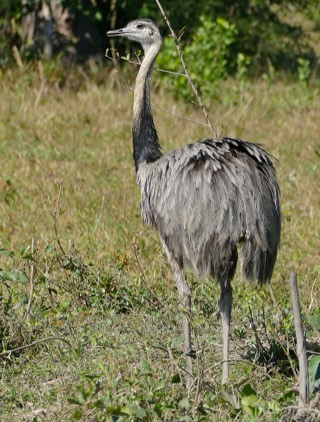 Greater Rhea (reference photo)
_(28234029614).jpg)
Species Data
- Classification
- Rheiformes / Rheidae Source
- Size
- Height about 1.4–1.7 m (maximum 1.83 m), body length 127–140 cm
- Weight
- Average 20–27 kg (males may reach 35–40 kg)
- Lifespan
- Wild: average about 10.5 years
- Diet
- Omnivore Omnivorous, feeding mainly on broad-leaved plants, seeds, and fruit, as well as insects, scorpions, small rodents, reptiles, and birds
- Distribution
- Native to Argentina, Bolivia, Brazil, Paraguay, and Uruguay; a feral population has been established in northern Germany since 2000. Source
- Sources
- en.wikipedia.org ja.wikipedia.org
Did You Know?
- Males are simultaneously polygynous while females practice serial polyandry; a single male incubates and raises the young alone at the nest, which can hold up to 80 eggs laid by multiple females. Source
- Stencils of greater rhea footprints dating to the early Holocene survive at rock art sites like Cueva de las Manos in Patagonia, evidence that early humans hunted the species. Source
Where to See This Species
Operating facilities registered on this site: Japan 1
Kurumeshichourui CenterFukuokaLocated at 1667 Higashi-Kushihara-machi, Kurume, Fukuoka, inside Chuo Park.
Source links to official sites, official YouTube channels, and news aggregators such as Zoo Ring. Visit the publisher for the full item.
Conservation Story
Conservation Status
Near Threatened (NT)
Sources
Support Conservation
A visit is a small, positive way to support the daily lives of the animals you care about.
- Visit
- A visit itself helps support the facility.
- Animal Supporter Programs & Giving
- Find ways to support the facility through its official website.
- Furusato Nozei
- Municipally run facilities may share official guidance for this Japanese hometown-tax program.
FAQ
- Can the greater rhea fly?
- No, like other ratites it is flightless, but it can run swiftly across open grassland using its long legs and outstretched wings for balance. Source
- Who takes care of greater rhea chicks?
- The male alone incubates the eggs—sometimes up to 80 laid by several different females in one nest—and raises the chicks entirely on his own. Source
- How many operating facilities are registered here?
- Operating facilities registered on this site: Japan 1 Source
Books & gear
Source: ja.wikipedia.org en.wikipedia.org