Green Iguanaグリーンイグアナ
Iguana iguanaLC— Least Concern
The green iguana is a large, primarily herbivorous lizard native to Central and South America, from southern Mexico to Brazil, Bolivia, and Paraguay. Juveniles are bright green, while adults often shift to grayish or reddish-brown tones, and the species is an agile climber and swimmer capable of surviving falls of up to 15 meters. It is assessed as Least Concern by the IUCN, though pet-trade escapees have established invasive populations in Florida, Taiwan, and other regions, including Japan.
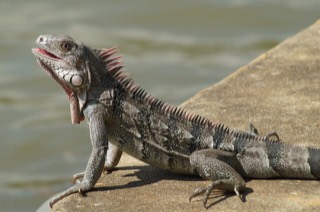 Green Iguana (reference photo)

Species Data
- Classification
- Squamata / Iguanidae Source
- Size
- Total length about 1.2–1.7 m; large males can exceed 2 m
- Weight
- Males average about 4 kg, females 1.2–3 kg; large individuals can reach 8 kg
- Diet
- Herbivore Herbivorous, eating young leaves, flowers, fruit, and shoots
- Distribution
- Native from southern Mexico through Central America to Brazil, Paraguay, and Bolivia; introduced populations from the pet trade are established in Florida, Hawaii, Taiwan, and elsewhere. Source
- Sources
- ja.wikipedia.org en.wikipedia.org
Did You Know?
Where to See This Species
Operating facilities registered on this site: Japan 6
Adventure WorldWakayamaOpened in 1978
Kyoto City ZooKyotoOpened in 1903
Kiryuugaoka DoubutsuenGunmaIf driving, set your car navigation to "Kiryugaoka Amusement Park" (Kiryugaoka Yuenchi) rather than "Kiryugaoka Zoo" to reach the parking lot (searching by the zoo name may give an incorrect route).
Noichi Zoological Park of Kochi PrefectureKochiA 20-minute walk or 13-minute rental-bicycle ride from Noichi Station on the Tosa Kuroshio Railway Gomen-Nahari Line.
Former facilities
North Safari SapporoHokkaidoOpened in 2005
Closed: 2025-09-30 Official Site
Conservation Story
Conservation Status
Least Concern (LC)
Sources
Support Conservation
A visit is a small, positive way to support the daily lives of the animals you care about.
- Visit
- A visit itself helps support the facility.
- Animal Supporter Programs & Giving
- Find ways to support the facility through its official website.
- Furusato Nozei
- Municipally run facilities may share official guidance for this Japanese hometown-tax program.
FAQ
- What do green iguanas eat?
- They are primarily herbivorous, feeding on leaves, flowers, fruit, and new plant shoots. Source
- What is the 'third eye' on a green iguana's head?
- It is a light-sensitive organ called a parietal eye, located on top of the head, that helps detect changes in light and shadow. Source
- How many operating facilities are registered here?
- Operating facilities registered on this site: Japan 6 Source
Books & gear
Source: ja.wikipedia.org en.wikipedia.org