Harbor Sealゼニガタアザラシ
Phoca vitulinaLC— Least Concern
The harbor seal (Phoca vitulina) is a true seal found across temperate and Arctic coastlines of the Northern Hemisphere. In Japan, a resident subspecies inhabits eastern Hokkaido year-round, making it the only seal species permanently established in Japanese waters. It feeds on a wide range of coastal fish and cephalopods, and its conservation status in Japan improved from Endangered in 1998 to Near Threatened by 2015.
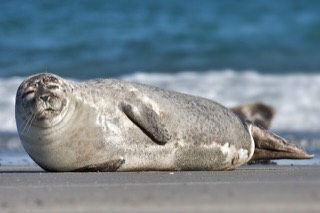 Harbor Seal (reference photo)

Species Data
- Classification
- Carnivora / Phocidae Source
- Size
- Females 120–170 cm, males 150–200 cm
- Weight
- Females 50–150 kg, males 70–170 kg
- Lifespan
- Males about 20 years / females about 30 years
- Diet
- Piscivore Preys on migratory, bottom-dwelling, and pelagic fish, as well as cephalopods and crustaceans such as octopus, shrimp, and squid
- Distribution
- The Japanese resident subspecies (P. v. stejnegeri) inhabits eastern Hokkaido, from Cape Erimo to the Habomai Islands, and is the only seal species that lives year-round along Japan's coast. Source
- Sources
- ja.wikipedia.org en.wikipedia.org
Did You Know?
- Its Japanese name references coin-like white spots on a dark coat; Japan's population is predominantly the dark color morph. Source
- Unlike ice-dependent seal species, harbor seals give birth on rocky shores rather than sea ice. Source
- Pups are born highly developed and capable of swimming and diving within hours of birth. Source
Where to See This Species
Operating facilities registered on this site: Japan 6
How to tell Sea Lions, Seals, Fur Seals, and Walruses apart →Kamogawa Sea WorldChibaAbout 2 hours from Tokyo Station on the Wakashio limited express to JR Awa-Kamogawa Station, then about 10 minutes by free shuttle bus (departing from the West Exit bus stop).
Kushiroshi DoubutsuenHokkaidoAbout 55 minutes from JR Kushiro Station by Akan Bus, or about 27 minutes (18 km) by car, taxi, or rental car.
Sapporoshimaruyama DoubutsuenHokkaidoOpened in 1951
Otaru AquariumHokkaidoOpened in 1958
Kinosaki Marine WorldHyogoAbout 10 minutes by Zentan Bus from JR Kinosaki-Onsen Station; get off at the Hiyoriyama (Marine World) bus stop.
Temporarily closed facilities
Shinyashima SuizokukanKagawaOpened in 1969
Temporarily closed Official Site
- 背中にイワシ #short #浅虫水族館 #水族館 #aquarium #青森 #ゼニガタアザラシ
- ぴかぴかのサツキ#short#浅虫水族館 #水族館 #aquarium #アザラシ #ゼニガタアザラシ #サツキ
- アザラシの餌やり体験
- 掴んでいます
Source links to official sites, official YouTube channels, and news aggregators such as Zoo Ring. Visit the publisher for the full item.
Conservation Story
Conservation Status
Least Concern (LC)
Sources
Support Conservation
A visit is a small, positive way to support the daily lives of the animals you care about.
- Visit
- A visit itself helps support the facility.
- Animal Supporter Programs & Giving
- Find ways to support the facility through its official website.
- Furusato Nozei
- Municipally run facilities may share official guidance for this Japanese hometown-tax program.
FAQ
- Is the harbor seal the only seal that lives in Japan year-round?
- Yes. The resident subspecies found in eastern Hokkaido is the only seal species permanently established along Japan's coast, unlike other species that only visit seasonally. Source
- Where do harbor seals give birth?
- They give birth on rocky shores rather than sea ice, distinguishing them from ice-dependent seal species. Source
- How many operating facilities are registered here?
- Operating facilities registered on this site: Japan 6 Source
Books & gear
Source: ja.wikipedia.org